


A Simple Way to Track Food Spending Abroad
Separate groceries, restaurants, coffee, and delivery only when the extra detail helps you adjust your routine, not just because it looks tidy.
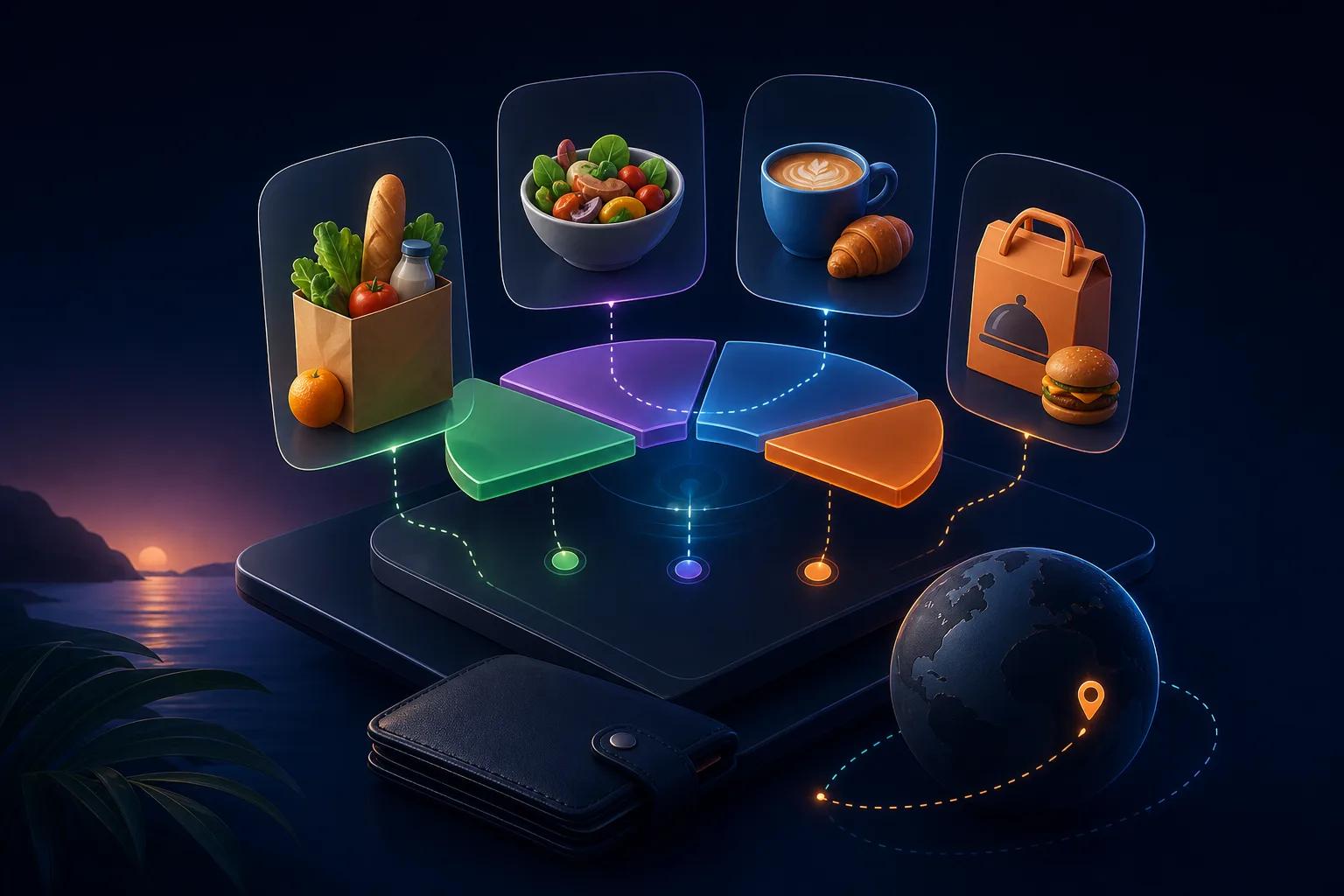
Food is one of the first categories that gets messy when you live abroad for more than a short holiday. A simple meal can involve a cash market, a card payment in another currency, a delivery app, a shared dinner, or a subscription you forgot was still billing back home. The goal is not to make your budget perfect. The goal is to see enough of your food spending to make better everyday decisions without turning meals into admin.
Start with the question you actually need answered
Before you create four or five food categories, pause and ask what you want the tracking to help you do. Many people start by copying a budget template: groceries, restaurants, cafes, takeout, bars, snacks, and maybe household supplies. That can look organized, but it can also create friction. If every receipt needs a small debate, you may stop recording things after a few busy days. Abroad, friction is even higher because receipts may be in another language, prices may feel unfamiliar, and you may be switching between cash, cards, transfers, and apps.
A better starting question is simple: what food spending decision am I trying to improve? If your main issue is that restaurant meals are eating into your rent buffer, then separating groceries from eating out is probably enough. If your main issue is that small cafe visits add up while you work remotely, then a separate coffee or cafe category might be useful. If delivery fees and convenience orders are becoming a habit after long workdays, delivery deserves its own line. The detail should serve a decision. If it does not change your behavior, it may be clutter.
For many long-stay nomads, a two-layer approach works well. Track all food under one broad parent category, then split only the parts that need attention. That way you can still answer the big question, how much does it cost me to eat here, while also noticing a specific habit if it matters. You are not trying to build a perfect accounting system. You are trying to create a practical feedback loop between your real life and your spending.
- Use one broad Food category if you only need a total monthly number.
- Split groceries and eating out if you are deciding whether to cook more often.
- Add coffee, delivery, or snacks only when those habits are large enough to act on.
- Remove categories that create work but do not change your choices.
Choose categories based on routine, not labels
The line between groceries and restaurants is not always obvious abroad. A bakery breakfast could be a grocery run, a cafe visit, or a cheap meal out depending on how you use it. A prepared lunch from a supermarket might replace a restaurant meal. A market purchase might include fruit, spices, soap, and a SIM top-up if the stall also sells small essentials. If you try to categorize every transaction by the type of vendor, your records may become technically consistent but not very useful.
Instead, categorize by routine. Groceries are food you buy to keep at home and use across several meals. Restaurants are meals you sit down for or intentionally go out to eat. Coffee or cafes are work or social stops that often include a drink, pastry, or light meal. Delivery is convenience food brought to you, usually with app fees and tips folded in. This routine-based method is easier to remember because it matches why you spent the money, not what the shop happened to be called.
There will still be edge cases, and that is fine. Pick a default rule and move on. If a supermarket sushi tray replaces lunch while you are between coworking and a call, you can treat it as eating out. If a bakery loaf and eggs are for the next few mornings, treat them as groceries. The value comes from being consistent enough to compare your weeks, not from winning every category argument.
- Groceries: ingredients and staples used across home meals.
- Restaurants: intentional meals out, including casual local places.
- Coffee or cafes: work sessions, social drinks, pastries, and small cafe habits.
- Delivery: app-based or arranged food brought to your door.
- Mixed purchases: use the category that best describes the main purpose of the spend.
Track in the currency you feel, then review in the currency you plan
Food spending abroad is hard partly because your brain may use two currencies at once. You pay in the local currency, but you judge affordability in your home currency, income currency, or a planning currency such as euros or dollars. On your first week in a new place, a lunch price may mean nothing until you mentally convert it. After a month, you may start to feel local prices more naturally. Your tracking system should support both stages.
For day-to-day recording, it helps to capture the amount in the currency you actually paid. If you spent 180 pesos, 52 lari, 38 złoty, or 11,000 won, write that down as paid. This keeps your record close to reality, especially when cash is involved. Later, for planning, convert or view the total in the currency you use to make decisions. That might be the currency of your income, your savings goal, or your monthly budget. The important part is to avoid mixing mental estimates with real numbers so much that your totals become unclear.
This is also where small exchange differences can make food feel more confusing than it is. A card may show a pending amount, then settle at a slightly different value. A cash withdrawal may include a fee. A delivery app may bill through a card in one currency while displaying menu prices in another. You do not need to chase every tiny difference if your goal is habit tracking, but you do need a consistent way to record the original spend and understand the approximate cost in your planning currency. Consistency matters more than microscopic precision.
- Record the paid amount in the local currency when possible.
- Review totals in the currency you use for monthly planning.
- Do not let tiny card settlement differences stop you from tracking the meal.
- For cash, record the spend close to the moment it happens, before small purchases blur together.
Build a low-friction habit for cash, cards, and shared meals
Food spending is often made of small transactions, and small transactions are the easiest to lose. A rent payment usually gets recorded because it is large and memorable. A transfer between accounts leaves a clear trail. But two coffees, a market snack, a shared taxi to dinner, and a few groceries paid in cash can disappear from memory by the next morning. When that happens repeatedly, your food category looks calmer than your wallet feels.
The simplest fix is to create one capture habit that fits your day. Some people record every transaction immediately. Others keep a note called today spending and clean it up once in the evening. Some take photos of receipts and enter them later. If you are moving around a city, working across time zones, or speaking a language you are still learning, the best method is the one you will actually use when tired. A rough note made at the stall is better than a perfect entry you never make.
Shared meals need their own simple rule. If you paid the whole bill and friends reimbursed you, record the net cost to you if your tracker supports it, or record the full meal and the reimbursements separately. If someone else paid and you sent your share by bank transfer or cash, record your share as the meal. Do not let reimbursement complexity make dinner invisible. For personal spending awareness, what matters is how much of your money went to your food and social life, not the drama of who tapped the card first.
- Use a quick capture habit for cash food purchases: note, receipt photo, or immediate entry.
- Record shared meals as your real share whenever possible.
- If you pay for others, track reimbursements separately or reduce the final cost when you reconcile.
- Have an unknown food note for messy days, then clean it up later instead of skipping it.
Review weekly, then decide whether more detail is worth it
A food budget becomes useful during review, not during categorization. Once a week, look at your food spending and ask what story it tells. Did groceries go up because you stocked a pantry in a new apartment? Did restaurants rise because you had visitors? Did delivery replace cooking during a deadline week? Did cafe spending buy you a quiet place to work when your room was too hot or noisy? Context matters. A number without context can make you feel guilty for no reason, while context helps you decide what to change.
This is the moment to decide whether your categories are too broad or too detailed. If your Food total is high but you cannot tell why, split it for the next two weeks into groceries, restaurants, coffee, and delivery. If you already know the issue is delivery, keep that separate and leave everything else broad. If coffee is tiny and you do not care, merge it back. Your category system can change as your routine changes. A month in a serviced apartment with a poor kitchen may need different tracking than three months in a flat near a good market.
In Nomad Flow, this kind of review is easiest when you keep the system local to your actual habits: a few categories, the real paid currency, and notes for the exceptions. You can keep food simple in quiet months and add detail when a new city, new workload, or new routine makes the numbers harder to read. The tool should help you notice patterns without making you feel like every sandwich needs a report.
- Review once a week instead of judging every transaction in the moment.
- Add detail temporarily when you cannot explain a high total.
- Merge categories when the extra detail stops helping.
- Write short notes for unusual weeks, such as visitors, moving days, deposits, or deadline periods.
Use food spending to understand the real cost of living
Food is one of the fastest ways to learn the practical cost of a place. Rent tells you one part of the story, but daily meals tell you how your life works there. A city with cheap restaurants may make cooking less important. A place with excellent markets may make groceries satisfying and affordable. A remote area may have lower rent but higher food variety costs. A tourist district may make everything feel expensive until you learn the local rhythm. Tracking food gives you a personal cost-of-living map, not a generic ranking.
Be careful, though, not to compare places too quickly. Your first week in a new country often includes setup costs, curiosity meals, mistakes, and convenience spending. You may eat out more because you have not found a market yet, do not have spices, or are still figuring out which brands are good value. By week three, your habits may look completely different. When you compare cities, compare similar periods if you can: settled weeks to settled weeks, not arrival week in one place to routine week in another.
Food tracking can also help you make humane tradeoffs. Maybe delivery twice a week is worth it during a heavy client sprint. Maybe a daily cafe is not just coffee but your workspace, social contact, and air-conditioning. Maybe cooking at home saves money but costs too much energy in a kitchen with one pan and no ventilation. The point is not to reduce every food cost. It is to understand which costs support the life you are trying to live abroad and which ones are just happening by default.
- Ignore arrival-week spending when judging a city unless you label it clearly.
- Compare settled routines, not travel days, moving days, or visitor weeks.
- Treat some food costs as lifestyle support, especially when they replace workspace or social spending.
- Look for default habits first: delivery because you are tired, snacks because meals are poorly planned, or tourist-area restaurants because you have not found local options yet.
Final thought
A simple food tracking system should make your life abroad easier to understand, not harder to live. Start broad, split only what helps you act, record the currency you paid, and review with context. Over time, your food spending becomes less of a blur and more of a practical guide to your routine in each place.