


Why Offline-first Matters on Travel Days
Airport days and border days are exactly when your money tracker should not depend on perfect internet, roaming, battery, or cloud sync.
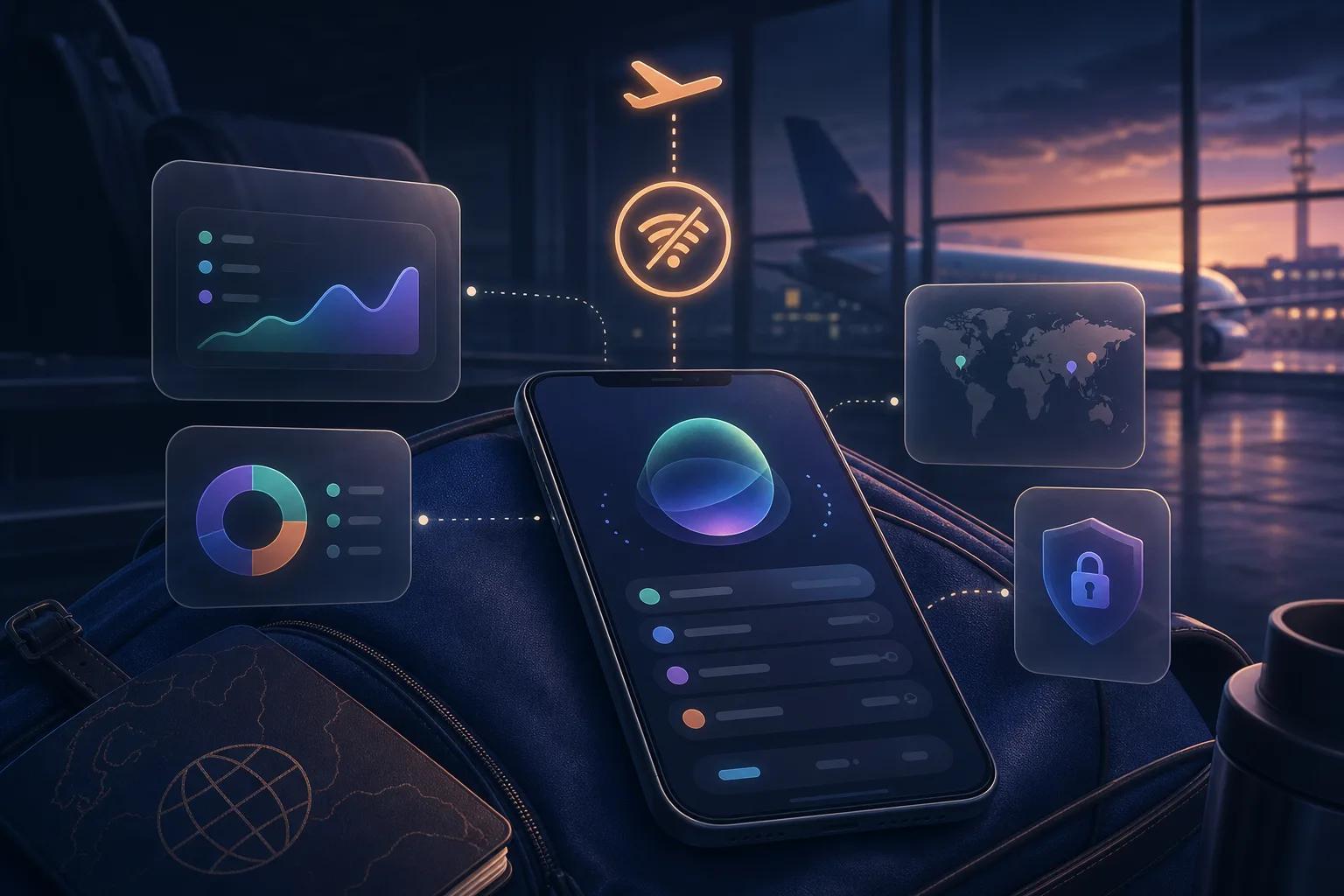
Travel days compress all the awkward parts of nomad money into a few tired hours: cash, cards, deposits, rides, roaming problems, currency conversion, and receipts you swear you will sort out later. Offline-first tracking matters because those are the exact moments when your finance system should stay calm and usable, even when the internet does not.
Travel days are where money gets messy fastest
Most people do not make their cleanest financial decisions at 5:40 in the morning outside a rental apartment, with one bag open, a driver waiting, and a landlord asking how you want the deposit returned. You may pay for an airport ride in cash, buy coffee with a card in one currency, withdraw local notes from an ATM, top up a transport card, pay baggage fees through an airline app, and accept a refund by bank transfer before lunch. None of these transactions are unusual, but together they create a trail that is easy to lose.
For long-stay nomads and remote workers, travel days are not a vacation exception. They are part of the monthly or quarterly rhythm of life. A border run, a new sublet, a month in a cheaper city, a family visit, a client trip, or a visa-related relocation can all shift your spending pattern. You may be moving between currencies, payment habits, and levels of banking reliability. The money story of that day is rarely captured by a single card statement.
The problem is not just missing one receipt. It is the way small gaps compound. If you forget which cash withdrawal paid for the taxi, groceries, SIM card, and key deposit, your cash balance becomes a guess. If you cannot note that a transfer was for rent rather than savings, your monthly view becomes blurry. If you delay conversion notes until the next day, you may remember the amount but not the context. Offline-first tracking gives you a place to record the messy truth while it is still fresh.
- Cash gets spent before bank feeds can explain it.
- Cards may show pending amounts, foreign currency holds, or delayed merchant names.
- Deposits, refunds, and transfers often need personal context that statements do not provide.
- Subscriptions and renewals can hit while you are in transit and least likely to review them.
- Currency conversion decisions are easier to understand when you note the reason at the time.
Internet access is least reliable when you most need a clear record
The modern assumption is that every important tool can ask the cloud for permission before it works. That assumption breaks down quickly on travel days. Airport Wi-Fi may require a phone number you no longer use. Roaming may not start until you restart your phone twice. A train crossing a border may leave you with one bar for an hour. A payment app may work, but your budgeting app may spin. Even when the connection exists, it may be slow, captive, expensive, or simply not worth trusting with sensitive financial data.
This is especially frustrating because travel-day transactions often arrive in clusters. You are not calmly reviewing one expense over breakfast. You are switching between boarding passes, maps, chat messages, passport scans, ride-hailing apps, translation tools, and banking confirmations. If your tracker cannot open without a connection, you are pushed into screenshots, notes apps, paper scraps, or memory. Those backups can work, but they create another cleanup task later, and cleanup is exactly what tired travelers postpone.
Offline-first does not mean anti-internet. It means the basic act of recording your money does not depend on the network being ready. You should be able to add an expense in airplane mode, adjust a cash balance on a bus, write a note about a rent deposit while standing outside a new building, and review your recent entries while waiting for a SIM counter to reopen. Sync can happen later. The record can begin now.
- No roaming yet after landing.
- Captive Wi-Fi blocking apps until you accept terms.
- Weak signal during transfers between airport, metro, bus, and apartment.
- Battery-saving mode limiting background sync.
- Cloud services temporarily unavailable or slow from your current location.
Offline-first is really about trust in your own timeline
A finance tracker is useful only if it fits the timeline of real life. Bank feeds, card statements, and exchange confirmations are helpful, but they often arrive after the decision has already happened. A pending card charge may not show the final amount. A bank transfer may need two business days. A crypto reference price may change before you sit down to log why you tracked it. A landlord may return part of a deposit in cash and part by transfer. Your memory is the bridge between the event and the eventual statement, and that bridge is strongest in the moment.
This is where local-first storage and offline-first access overlap. When your working record lives on your device first, you can use it in the same way you use a notebook, but with structure: accounts, categories, currencies, notes, tags, and dates. You do not need to wait for a server to confirm that your own spending happened. You can write down the context now, then reconcile later when statements, exchange rates, or receipts are available.
For example, Nomad Flow is designed around this kind of practical record-keeping: local-first, privacy-conscious, and usable when your connection is not the main character. That matters less on a quiet Tuesday at your desk and much more when you are between apartments, accounts, and currencies. The goal is not to make travel-day money perfect. The goal is to make it recoverable.
- Record the intention of a transfer before the bank description becomes vague.
- Mark a cash expense while you still remember whether it was transport, food, or a fee.
- Add a note that a card charge is a deposit hold, not ordinary spending.
- Separate personal spending from client travel before receipts get mixed together.
- Keep reference notes for crypto or investment-related tracking without treating the tracker as advice.
The privacy angle is not abstract when you are moving
Privacy-first finance can sound philosophical until you are trying to manage money on public Wi-Fi at an airport gate. Travel puts you on networks you did not choose, in places where you may be tired, hurried, and surrounded by strangers. You might be checking balances, copying IBANs, confirming transfers, scanning receipts, or opening apps that reveal where you live and what you spend. The fewer unnecessary cloud calls your finance workflow needs in that moment, the calmer it feels.
Local-first does not remove every risk, and it is not a substitute for basic device security. You still need a locked phone or laptop, careful backups, sensible passwords, and judgment about what you open in public. But an offline-capable tracker reduces one category of dependency: you are not forced to expose your personal finance routine to whatever connection happens to be available. You can capture the record privately now and sync, export, or back up later on a network you trust more.
This matters for more than secrecy. It also matters for dignity. Many nomads have money lives that look irregular from the outside: freelance invoices paid late, rent paid through transfers, cash buffers for local markets, shared expenses with partners, card limits spread across banks, emergency savings in another currency, or reference tracking for assets that are not used day to day. A private local record lets you organize that complexity without feeling watched by every tool in the chain.
- Use offline entry instead of logging into multiple accounts on public Wi-Fi.
- Keep sensitive notes, categories, and account names local when possible.
- Delay syncing or exporting until you are on a trusted connection.
- Protect your device with a strong passcode and backup plan.
- Treat tax, visa, crypto, and investment-related notes as personal records, not legal, tax, or financial advice; verify important decisions with a qualified professional in the relevant place.
A practical travel-day workflow that survives airplane mode
The best offline-first workflow is simple enough to use when you are tired. Before leaving, open your tracker and make sure your main accounts are current enough to be useful: cash in the local currency, the card you expect to use, any travel wallet, and the account where rent or deposits may move. You do not need perfection. You just need a believable starting point. If you know your cash count is approximate, mark it as approximate rather than pretending it is exact.
During the travel day, log only what you need to preserve context. You can refine categories later. A quick entry with amount, currency, payment method, and a plain note is often enough. Instead of searching for the perfect category at the ticket counter, write airport bus, baggage fee, temporary SIM, deposit returned, or cash to driver. If you split costs with a partner or friend, note who paid and who owes whom while you are both still in the same place. If a card charge is only a hold, mark it clearly so you do not mistake it for final spending.
After arrival, do a short reset while the day is still visible in your mind. Count remaining cash. Review the entries that were made offline. Attach or store receipts if that is part of your routine. Check whether any transfers need follow-up. Convert only what you need for your own understanding, and avoid pretending that a rough conversion is an official accounting record. The point is to prevent the next week from starting with financial fog.
- Before leaving: update cash, expected cards, rent or deposit accounts, and any shared balances.
- During transit: record fast notes, not perfect categories.
- At arrival: count cash, review offline entries, and flag anything unresolved.
- Next quiet session: reconcile with bank statements, receipts, and final card amounts.
- Keep a small travel-day category or tag if it helps you review the cost of moving between places.
Offline-first helps you see the real cost of movement
Nomad life is often described through rent comparisons and flight prices, but the real cost of movement is broader. There are airport transfers, luggage storage, temporary accommodation gaps, food when you cannot cook, mobile data, laundry after arrival, replacement toiletries, ATM fees, deposit timing, and the mental cost of tracking money across systems. When these items are not recorded, moving feels cheaper than it is. When they are recorded with context, you can make calmer decisions about how often to move and what kind of move is worth it.
This is not about guilt. A travel day can be expensive for good reasons. Paying for a safer late-night ride may be sensible. Choosing a direct flight may protect work energy. Keeping extra cash may reduce stress in a cash-heavy city. Renting a place with a better check-in process may save a day of chaos. Offline-first tracking simply keeps these decisions visible. It lets you see patterns without relying on perfect statements, perfect memory, or perfect connectivity.
Over time, those patterns become useful. You may notice that border days always create cash confusion, so you count cash before and after. You may learn that one card creates unclear pending charges abroad, so you use it less for deposits. You may realize that monthly subscriptions renew during relocation week, so you review them before moving. You may see that slow travel reduces not only rent volatility but also the small friction costs around each move. The value is not in judging every expense. The value is in understanding your own rhythm.
- Movement costs include more than flights and rent.
- Offline notes preserve why an expense made sense in the moment.
- Cash and card records become easier to reconcile when logged close to the event.
- Patterns help you design better routines for future moves.
Final thought
Offline-first money tracking is not a luxury feature for people who love spreadsheets. It is a practical safety net for the days when your money life is most fragmented and your connection is least dependable. On travel days, the calmest system is the one that lets you record reality first and tidy it later.