


Privacy-first Finance: Why Local-first Money Tracking Matters
Your spending history can reveal where you live, work, bank, and travel. Local-first tracking keeps more of that private by default.
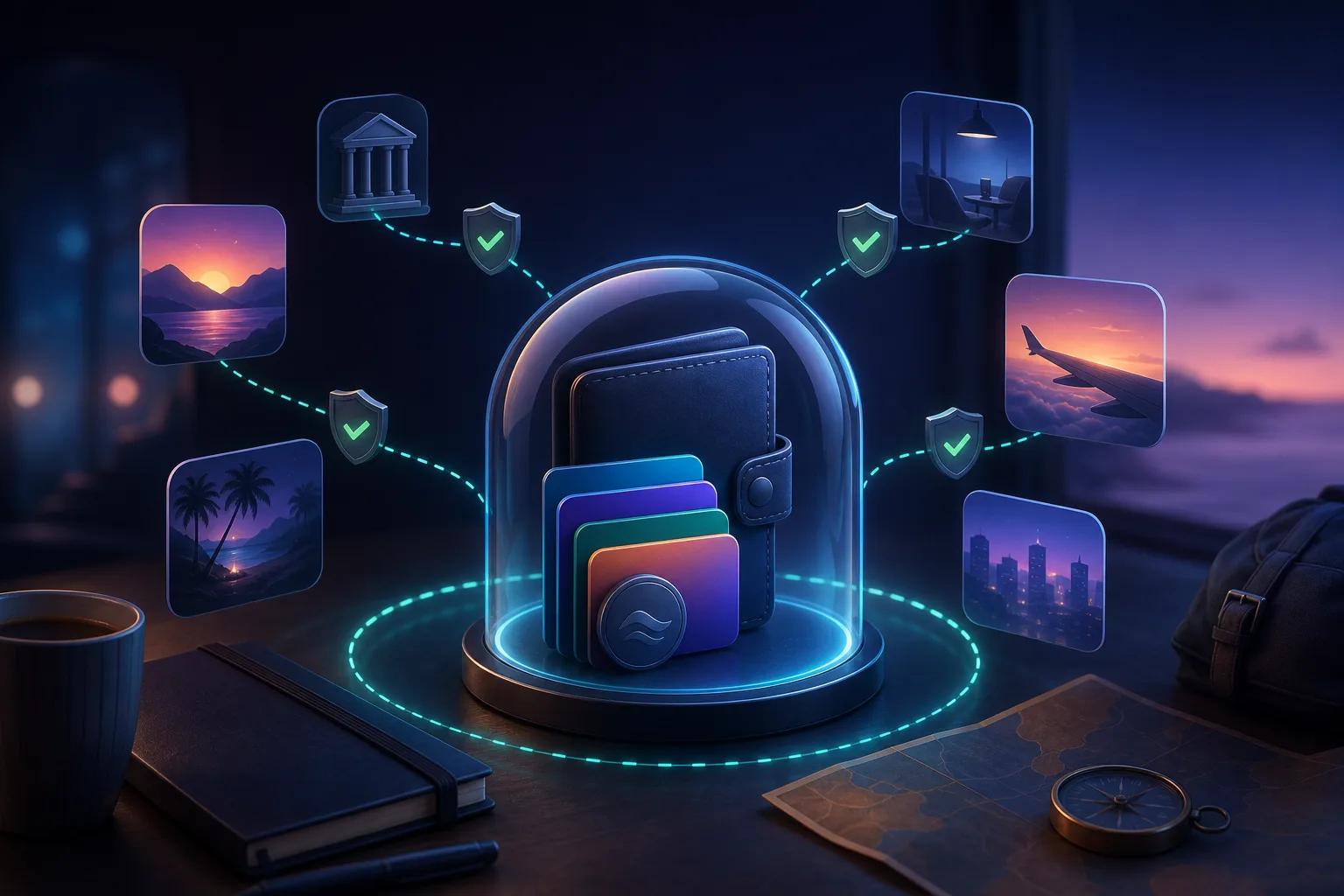
Money tracking is not just about numbers. For digital nomads, it can describe an entire life: the café where you work, the apartment deposit you paid in cash, the transfer you made to cover rent, the card you use for groceries, the subscription you forgot to cancel, and the countries you move through. That is why privacy-first, local-first finance tools matter.
Your spending history is a map of your life
A personal finance record can look harmless at first: dates, amounts, categories, merchants, notes, balances, and currencies. But over time, it becomes a detailed timeline of where you were, what you were doing, who you paid, and what kind of routines you keep. A few weeks of transactions may reveal your neighborhood, gym, coworking space, clinic, language school, favorite grocery store, and travel days. A year of records can show income patterns, rent levels, client payment timing, visa runs, family support, and how much cash you keep on hand.
For long-stay nomads and remote workers, this can be even more revealing because the records are not contained within one banking system or one country. You may have a home-country bank account, a travel card, a local wallet, cash envelopes, transfer services, a business account, and maybe a crypto reference balance you track for context. The more scattered your money life is, the more tempting it becomes to connect everything to one cloud service just to make sense of it. The convenience is real, but so is the sensitivity of the picture being created.
Privacy-first finance starts with a simple idea: your spending history deserves the same care as your passport scan, medical documents, or private messages. It is not that every transaction is secret on its own. It is that the pattern is personal. A local-first approach tries to keep that pattern closer to you, instead of automatically sending it through more systems than necessary.
- A rent payment can reveal where you live or how long you plan to stay.
- A series of café and coworking payments can show your daily work routine.
- Transfers and deposits can expose income timing, family support, or shared housing arrangements.
- Cash notes can reveal local habits that never appear in bank feeds.
- Multi-currency records can show the countries and services you rely on most.
What local-first means in everyday money tracking
Local-first means the primary copy of your data lives on your device, under your control, rather than being treated as something that must first pass through a remote server. In a finance app, that can mean your accounts, transactions, categories, notes, budgets, and exchange-rate references are usable even when you are offline. It can also mean that you are not required to connect bank feeds or hand over credentials just to understand your spending.
This matters in practical nomad life. Internet access is not always stable. You might be on a ferry, in a mountain town, in a guesthouse with weak Wi-Fi, or between SIM cards. If your finance tracker only works well when it can reach a server, you may stop recording the small details that make your records useful. Local-first tracking lets you log the cash taxi from the airport, the deposit paid to a landlord, the shared dinner split in local currency, or the ATM withdrawal while the details are still fresh.
Local-first does not have to mean isolated or old-fashioned. Some people still want exports, backups, syncing between devices, or optional ways to import data. The difference is the starting point. Instead of assuming that your financial life belongs in a cloud account by default, a local-first tool treats your device as the center and asks what needs to leave it, when, and why.
- Offline-first use is helpful when travel days, weak connections, or SIM changes interrupt your routine.
- Manual entry can be slower than automatic feeds, but it often creates better context for cash, rent, deposits, and shared costs.
- Local records make it easier to track money that banks do not describe well, such as envelopes, informal reimbursements, or multi-step transfers.
- Exports and backups can still be useful, but they should be intentional choices rather than hidden assumptions.
Why fewer data copies usually means less exposure
Every place your financial data goes becomes another place it must be protected. A bank already has its records. A card provider has its records. A transfer service has its records. If you connect all of those accounts to a third-party aggregator, then sync that into a budgeting platform, and receive email summaries on top, your money trail may now exist in several more systems. Each system may have different retention practices, access controls, analytics tools, support workflows, and security risks.
This is not about panic or assuming bad intentions. Many financial services work hard to secure user data, and cloud tools can be genuinely useful. The practical point is simpler: sensitive data that is not collected, transmitted, or stored elsewhere cannot leak from that elsewhere. Local-first money tracking reduces the number of routine copies created in the first place. For a nomad, that can be especially valuable because your financial record may include cross-border behavior, accommodation details, and temporary life arrangements that you would not want broadly visible.
There is also a human side to data exposure. The notes you add to your own tracker may be more candid than the merchant data in your bank account. You might write “deposit for room in Sofia, refundable,” “cash loan from friend until client pays,” “medicine after food poisoning,” or “visa appointment travel.” These notes are useful precisely because they are personal. They help you remember what happened and make better sense of your money later. But that usefulness is a reason to keep them close, not a reason to scatter them across systems.
- Ask whether a tool needs full transaction access or whether manual tracking is enough for your use case.
- Be cautious with free services that may rely on data-heavy business models, even if they are convenient.
- Keep personal notes as private as possible, because they often explain more than the transaction itself.
- Use exports deliberately and store them somewhere you understand and trust.
The messy parts of nomad money need context, not just automation
Automatic bank feeds can be helpful when your money life is simple. Nomad money is rarely simple. You may pay rent from one account, withdraw cash from another, receive freelance income through a platform, move funds through a transfer service, and spend locally with a card that settles in a different currency. Then there are deposits, reimbursements, subscriptions, refunds, card holds, and exchange-rate differences that make the same purchase look slightly different depending on where you record it.
A privacy-first tracker should support the reality that some of the most important financial events do not arrive neatly from a bank feed. A cash payment to secure a room, a landlord deposit returned in a different currency, a friend paying you back over dinner, or a subscription charged to a forgotten card can all be easy to miss. The goal is not perfect accounting. For most people, the goal is a clear personal record: what happened, which currency it happened in, whether it was one-time or recurring, and how it affects the next month.
This is also where crypto reference tracking should be handled carefully. Some nomads like to keep a personal note of crypto balances or reference values alongside cash and bank accounts, but that does not turn a finance tracker into investment guidance. Prices can move quickly, tax treatment can vary by place and situation, and records may matter differently depending on your obligations. Treat crypto, tax, legal, and visa-related notes as personal recordkeeping, and verify important decisions with qualified professionals or official sources when needed.
- Track transfers as movements between accounts, not as income or spending, when that better reflects reality.
- Record the currency used at the moment of the transaction, then add a reference conversion only if it helps you understand the total.
- Separate refundable deposits from ordinary spending so they do not distort your view of monthly life costs.
- Use notes for context: who was paid, what the payment covered, and whether you expect a refund or reimbursement.
- Review recurring subscriptions by card and currency, because they often continue quietly after you leave a country.
Building a calmer privacy-first money routine
A local-first approach works best when it supports a simple routine. You do not need to document every detail forever or turn personal finance into a second job. A practical rhythm might be: record cash spending daily while it is still memorable, review card transactions every few days, check subscriptions once a month, and reconcile rent, deposits, transfers, and income when they occur. The point is to reduce uncertainty, not create a perfect archive of every coffee.
Good categories help, but too many categories can become noise. For nomads, it often helps to separate stable life costs from travel movement. Rent, groceries, coworking, transport inside a city, mobile data, insurance, and subscriptions tell you what it costs to live somewhere. Flights, intercity trains, setup costs, deposits, gear, and visa-related travel may explain why a particular month looks unusual. When your tracker can show both the local routine and the transition costs, your budget becomes easier to understand.
Nomad Flow is built around this kind of privacy-first, local-first habit: keeping personal finance records useful on your device, friendly to multiple currencies, and practical for the everyday mess of living between places. It is not meant to make money feel abstract or over-automated. It is meant to help you keep a clear personal record without assuming that every detail of your spending life needs to be uploaded somewhere by default.
- Choose a small set of categories you will actually use consistently.
- Log cash quickly, even with short notes, because cash is the easiest to forget.
- Review deposits and reimbursements separately from normal spending.
- Keep a monthly check-in for subscriptions, cards, and currency balances.
- Back up or export intentionally, and understand where that backup lives.
Privacy is a design choice and a personal habit
Privacy-first finance is partly about software design, but it is also about behavior. A local-first tool can reduce routine exposure, yet you still need to think about device security, backups, exports, screenshots, shared devices, and where you store sensitive documents. If your laptop is unlocked in a coworking space or your exported spreadsheet sits in an unprotected shared folder, the benefits of local-first storage are weakened.
The habit is not complicated: collect less, share less, and review what you keep. You can decide which accounts deserve detailed tracking and which only need a monthly balance. You can keep sensitive notes brief. You can avoid connecting services that do not need to be connected. You can delete old exports when they are no longer useful. None of this requires paranoia. It is just the financial version of packing lighter: carry what helps, leave what does not.
For people living across currencies, privacy and clarity are connected. When your records are scattered, you may feel pressured to centralize everything quickly. When your local record is clear enough, you can be more selective. You can understand your rent, cash, cards, transfers, subscriptions, and reference balances without handing the whole pattern of your life to every tool that offers convenience.
- Use a device passcode, screen lock, and sensible backup habits.
- Be careful with screenshots of balances, transactions, addresses, or account names.
- Store exports in places you control, and remove old copies when they are no longer needed.
- Limit account connections to the ones that provide enough value to justify the access.
- Review app permissions and data settings periodically, especially when changing devices.
Final thought
Your money record is more than a budget. It is a private timeline of where you live, how you work, and how you move through the world. Local-first tracking helps keep that timeline closer to you, while still giving you the clarity to manage real nomad life with less noise.