


Portugal Money Basics for Nomads and Movers
A calm, practical money map for longer stays in Portugal: cards, cash, rent, deposits, transfers, subscriptions, currency conversion, and daily routines.
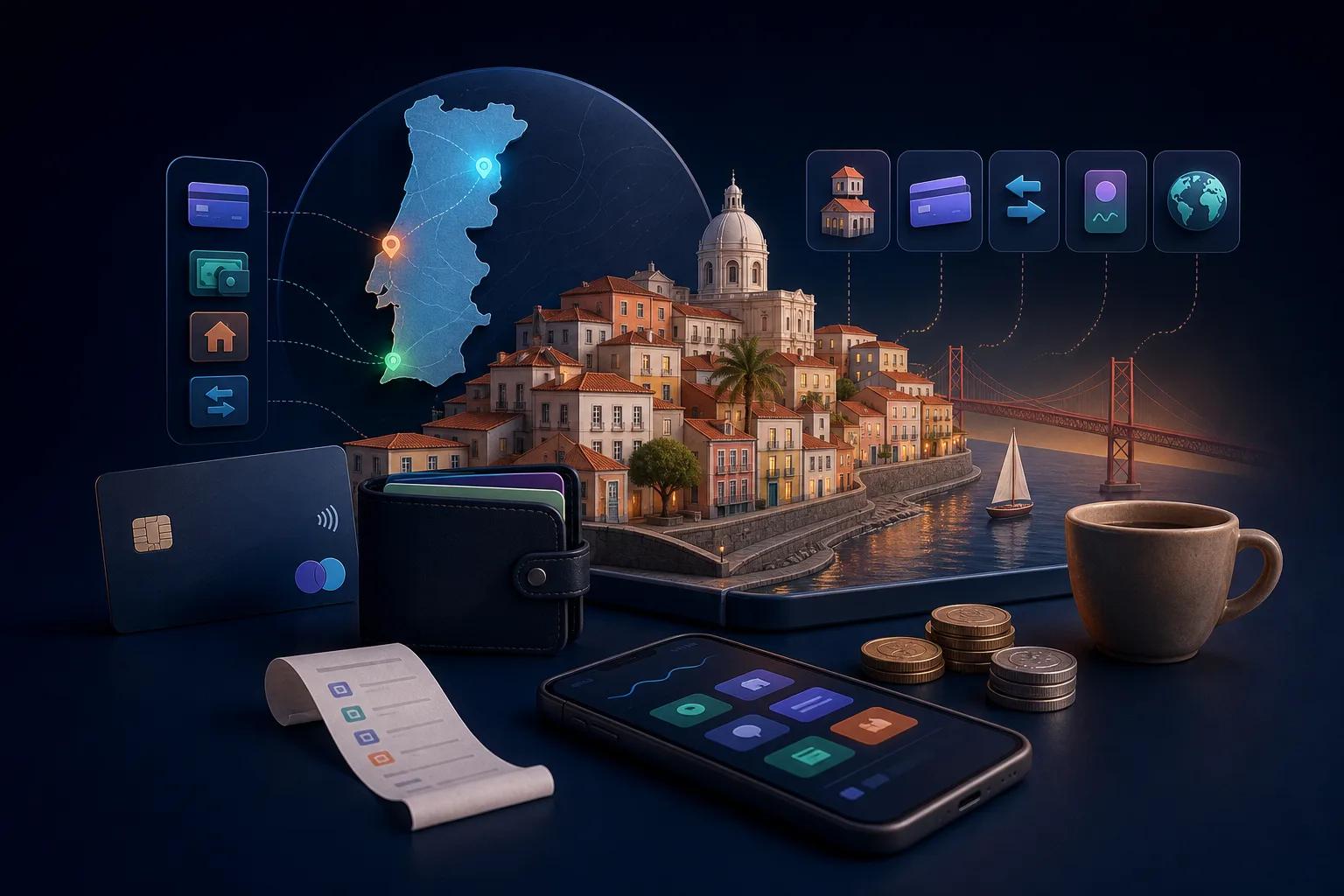
Portugal is one of those places where daily money can feel easy on the surface and a little messy underneath. Cards work widely, cash still matters, rent often has its own rhythm, and life across euros and another home currency can blur your real costs. This guide is a practical money map for nomads, remote workers, freelancers, and movers spending longer periods in Portugal.
Start with the shape of your Portugal stay
Before you optimize cards, accounts, or exchange rates, it helps to define the shape of your stay. A two-month stay in Lisbon with a furnished apartment is a different money problem from a year split between Porto, Madeira, and visits home. The first version may only need reliable cards, a cash buffer, and a simple way to track rent. The second may involve local banking, recurring bills, deposits, tax questions, business income, and more careful currency planning.
Portugal runs on the euro, which simplifies life if your income is also in euros. If you earn in dollars, pounds, Canadian dollars, Australian dollars, crypto, or a mix of client currencies, your real cost of living depends on the conversion rate on the day money moves. This matters more than many newcomers expect. A cafe bill is easy to understand, but a rent transfer, security deposit, insurance payment, or quarterly tax set-aside can feel different when your home currency moves against the euro.
A useful first step is to separate your Portugal money into layers: daily spending, housing, transfers, emergency funds, and obligations back home. Many nomads try to keep everything in one mental bucket, then wonder why the month feels more expensive than expected. Portugal may be calmer and more affordable than some large global cities, but long stays still come with deposits, setup costs, public transport passes, mobile plans, coworking days, weekend trips, health costs, and occasional bureaucracy.
- Daily spending: groceries, cafes, transport, mobile data, small cash payments, eating out, laundry, and local errands.
- Housing: rent, security deposit, agency or platform fees, utilities, cleaning, repairs, and move-in purchases.
- Cross-border money: card payments, ATM withdrawals, bank transfers, exchange rates, income deposits, and client payments.
- Longer-stay obligations: insurance, tax set-asides, home-country subscriptions, loan payments, software, and professional services.
Cards, cash, ATMs, and local payment habits
Portugal is generally card-friendly, especially in cities, supermarkets, transport apps, hotels, coworking spaces, and many restaurants. Still, it is worth carrying some cash. Smaller cafes, market stalls, older family-run shops, local services, and rural businesses may prefer cash or have card limitations. Even where cards are accepted, the terminal may not love every foreign card. A backup card and a small euro cash reserve can prevent a normal errand from becoming a problem.
ATMs are common, but not all ATM experiences are equal. Some machines are part of mainstream banking networks, while others are independent machines placed in tourist areas. The screen may offer currency conversion, and that offer can look convenient. In many cases, choosing to be charged in euros and letting your own card provider handle conversion may be better, but you should always check your card terms and the rate shown. The key habit is simple: slow down at the ATM. Read the prompts. Do not treat every withdrawal as identical.
Portugal also has strong local payment habits. You will see references to Multibanco, which is associated with many everyday payment functions, and MB Way, a popular mobile payment method linked to Portuguese banking. As a newcomer, you may not be able to use every local payment option immediately, especially without a local bank account or compatible setup. That does not mean you cannot function. It just means some bills, small merchants, or person-to-person payments may be easier once you understand what locals use.
- Keep at least two cards from different issuers or networks, stored separately when possible.
- Carry a modest amount of euros for markets, small shops, tips, taxis, and card terminal issues.
- When a terminal or ATM asks whether to charge you in your home currency or euros, pause and compare the implications.
- Track ATM fees separately from cash spending so withdrawals do not hide the true cost of daily life.
- Test your cards with small transactions early in your stay, before you rely on them for rent, deposits, or travel days.
Rent, deposits, utilities, and the real cost of settling in
Housing is usually the biggest Portugal money decision. Short-term rentals, serviced apartments, local leases, coliving spaces, and room rentals all handle payments differently. Some expect card payments through a platform. Others prefer bank transfer. Some landlords or agents may ask for a security deposit, advance rent, documents, or a local tax identification number such as a NIF. Requirements vary by landlord, city, contract type, and your personal situation, so treat every listing as something to verify rather than something to assume.
The first month in Portugal can look unusually expensive because several costs arrive together. You might pay a deposit, the first rent period, a cleaning fee, temporary accommodation while apartment hunting, a SIM card, transport pass, basic home items, coworking access, and a few restaurant meals while you are still building routines. This can make Portugal feel more expensive than it will be after you settle. If you are comparing cities, compare the first month and a normal month separately.
Utilities deserve their own line in your budget. In some rentals, electricity, water, internet, or gas are included. In others, they are separate or capped. Heating and cooling costs can surprise people because many homes are not designed like homes in colder or hotter climates. A beautiful apartment with poor insulation may be comfortable in spring and less comfortable in winter. If you work from home, also ask about internet stability, desk setup, noise, and whether your electricity use will change the bill.
- Before sending a deposit, verify who you are paying, what the payment covers, refund conditions, move-in date, and whether there is a written agreement.
- Ask whether utilities are included, capped, estimated, or billed separately after actual use.
- Keep rent, deposit, utilities, and cleaning fees in separate categories so you can see what housing really costs.
- Budget for setup purchases such as adapters, bedding, kitchen basics, a monitor, chair upgrades, or portable heating and cooling items.
- Save payment confirmations, messages, receipts, and agreements in one place in case you need to reconstruct the story later.
Banking, transfers, and currency conversion
You can spend time in Portugal without immediately opening a local bank account, especially if you use international cards and multi-currency services. But for longer stays, local banking may become useful. It can make some transfers, local payments, rent arrangements, and subscriptions smoother. Whether you need one depends on your rental setup, residence plans, work structure, and comfort with foreign card fees. Bank requirements and onboarding processes can change, so it is best to check current details directly with the bank or a qualified local professional if your situation is more complex.
Currency conversion is where many nomads quietly lose track. The cost is not only the visible fee. It can also be in the spread between the market rate and the rate you actually receive, the timing of transfers, intermediary bank charges, card foreign transaction fees, and ATM fees. None of these are dramatic on a coffee purchase, but they become meaningful on rent, deposits, business transfers, or moving savings between countries. You do not need to obsess over every cent; you do need to know which channels are expensive and which are reasonable for your use case.
Freelancers and remote workers should pay extra attention to the path from income to local spending. A client may pay into one platform, your savings may sit in another currency, your card may settle in a third place, and your rent may be due in euros. Each step can create a conversion or transfer event. If you invoice in a non-euro currency, consider recording the original invoice amount, the amount received, the conversion rate or final euro value, and any fees. This gives you a practical record for planning, even before you think about accounting.
- Use one main method for routine euro spending and a separate backup for emergencies.
- For large transfers, compare the total received amount, not just the advertised fee.
- Avoid mixing business income, personal spending, tax reserves, and rent money in a way that makes your records hard to understand.
- Record both the original currency and the euro value for large or recurring transactions.
- Keep a simple note of which card or transfer service you used, because it helps explain differences between expected and actual costs.
Build routines for subscriptions, taxes, and multi-currency life
Long-stay money in Portugal is not only about what you buy in Portugal. It is also about what keeps charging you elsewhere. Streaming services, cloud storage, business tools, insurance, mailboxes, professional memberships, home-country phone plans, bank account fees, and app subscriptions can continue quietly in another currency. When you are settling into a new place, these background costs become easier to ignore. Then, at the end of the month, your Portuguese grocery and cafe spending may look reasonable while your total outflow feels too high.
This is where a local-first tracker can be helpful. In Nomad Flow, for example, you might keep rent in euros, record a U.S. software subscription in dollars, mark an ATM withdrawal as cash, and keep a reference line for crypto values without treating it like everyday spending. The point is not to create a perfect financial dashboard. It is to make your messy money visible enough that you can make calm decisions: which card is leaking fees, whether your Lisbon month is really more expensive than your Porto month, or how much of your budget is still tied to life outside Portugal.
A light but important note: taxes, residency, visas, business registration, and crypto reporting can depend on your nationality, residence pattern, income type, assets, and personal history. This article is general information, not tax, legal, immigration, investment, or accounting advice. If your stay becomes long-term, if you run a business, if you trade or hold crypto, or if you are unsure where you are tax resident, speak with a qualified professional who understands your situation.
- Review subscriptions once during your first week and again after your first full month.
- Separate local living costs from home-country obligations so Portugal does not get blamed for every expense.
- Create categories for cash, card, rent, utilities, transfers, fees, health, work tools, and travel between bases.
- If you track crypto, keep it as reference information unless you have a clear reason to mix it with daily spending records.
- Set a monthly review day that matches your rent cycle, not necessarily the calendar month.
A simple monthly money map for Portugal
Once you have the basics in place, the goal is not to micromanage. It is to make Portugal feel financially ordinary. You want to know how you pay rent, where cash comes from, which card handles groceries, what subscriptions are still active, and how much you usually spend on local routines. This gives you space to enjoy the parts of life that brought you there: morning coffee, neighborhood markets, ocean walks, train trips, language classes, coworking friendships, and slower evenings.
A good monthly review can be short. Look at housing first, because it is the anchor. Then review groceries, eating out, transport, health, work costs, and travel. Finally, check transfers and fees. If your month felt expensive, ask what kind of expensive it was. Was it a one-time setup month, a currency movement month, a visitors-and-weekend-trips month, or a genuine lifestyle drift? These are different problems, and they need different responses.
Portugal rewards practical routines. Keep some cash, use cards deliberately, verify housing payments, watch conversion costs, and document the boring things. The more your money system matches your actual life, the less time you spend untangling it later.
- First week: test cards, withdraw a small cash buffer, list active subscriptions, and decide how you will record rent.
- Before signing housing: confirm payment method, deposit terms, utility treatment, internet reliability, and receipt or agreement details.
- First full month: compare expected spending with actual spending, including fees and home-country charges.
- Every month after: review rent, food, transport, work tools, transfers, and one-off costs before making changes.
- Before leaving or moving cities: settle deposits, close local bills, export records, and note which costs were location-specific.
Final thought
Portugal can be a steady, comfortable base when your money system is clear enough for real life. You do not need perfect spreadsheets or complicated rules. You need reliable ways to pay, a record of what happened, and a calm habit of checking the costs that hide between currencies, deposits, subscriptions, and local routines.