


How to Prepare Your Money Setup Before Leaving a Country
Close the money loops before you move on: cash, deposits, subscriptions, local balances, refunds, cards, transfers, and daily spending routines.
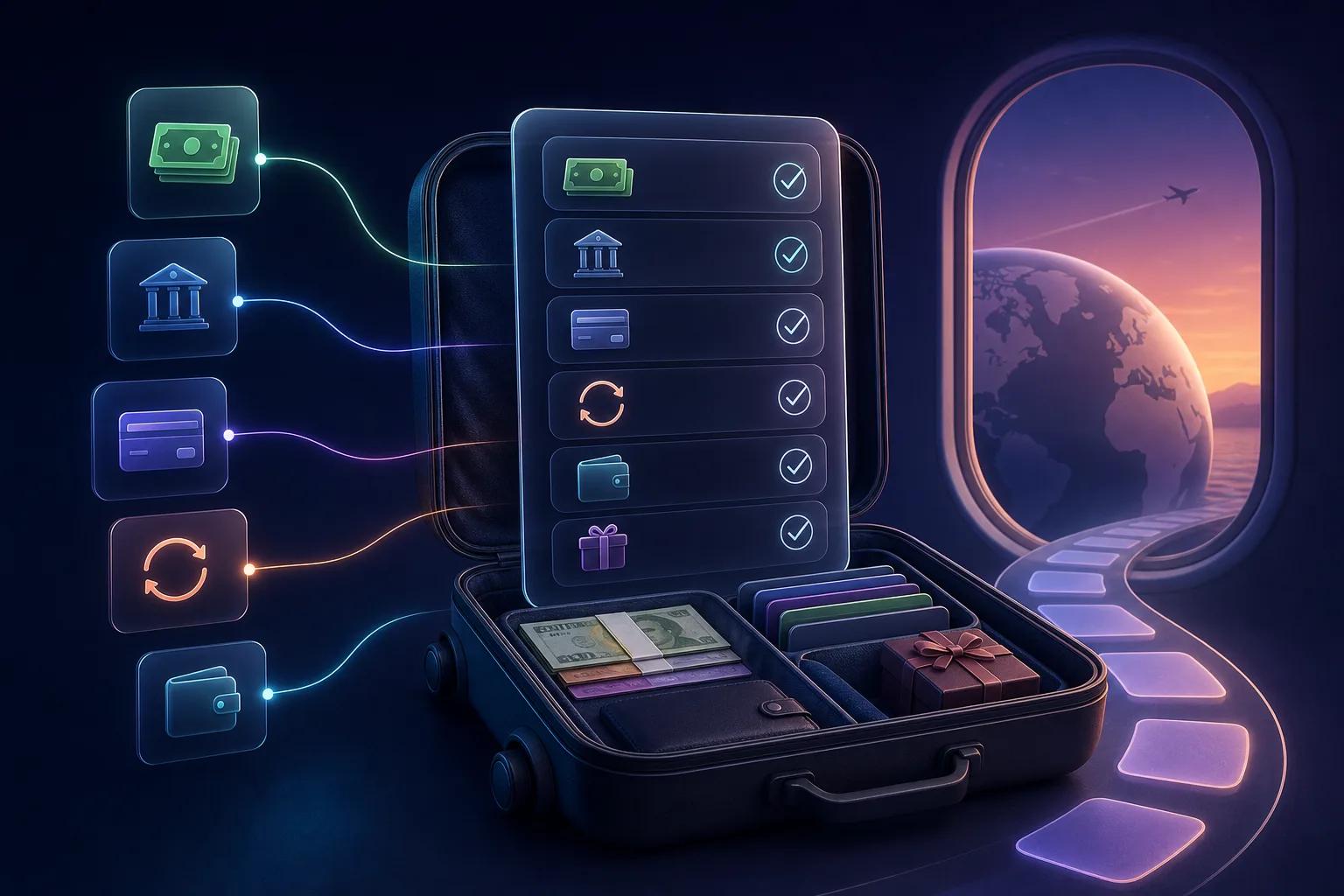
Leaving a country is rarely as simple as packing a bag and booking a ride to the airport. Your money setup has loose ends too: small cash piles, rent deposits, local wallet balances, subscriptions, pending refunds, transfer limits, card holds, and expenses you will only remember once you are already somewhere else. A calm exit plan helps you close those loops before they become expensive, confusing, or just annoying.
Start with a simple departure money audit
A good money exit starts before the final week. Ideally, give yourself two to four weeks to review what is still tied to the country you are leaving. That does not mean building a complicated spreadsheet. It means making a clear list of every place your money might be sitting, moving through, or being charged from.
For nomads, the list is often more fragmented than it looks. You may have cash in a drawer, a balance in a local bank or wallet, a deposit with your landlord, a utility bill that has not closed yet, a coworking membership, a gym subscription, a local SIM plan, a transit card, a delivery app wallet, and a card pre-authorization from a hotel or scooter rental. None of these items are dramatic on their own. Together, they can turn into a messy after-departure admin trail.
The goal is not perfection. The goal is visibility. Once everything is visible, you can decide what to spend down, withdraw, transfer, cancel, document, or leave in place for a clear reason.
- List all local accounts, wallets, apps, cards, cash, deposits, and recurring payments connected to the country.
- Check which balances can be withdrawn, transferred, refunded, spent, or donated before you leave.
- Note any pending charges, refunds, pre-authorizations, or invoices that may settle after departure.
- Create a small buffer for your final week so you are not forced into rushed currency exchanges or expensive last-minute transfers.
Deal with cash, coins, and local balances early
Cash is one of the easiest things to ignore until the last day, and one of the most irritating things to handle at the airport. Digital nomads often keep emergency cash, leftover ATM withdrawals, small envelopes for rent or cleaning fees, coins from daily purchases, and sometimes multiple currencies from previous stops. Before leaving, separate what you can realistically use from what you need to convert or keep.
Try to spend down cash in normal places first: groceries, transport, cafés, laundry, phone top-ups, local markets, or small bills that are easier to pay in cash. This usually gives you a better practical outcome than waiting for an airport exchange counter. Coins can be especially difficult to convert, so use them for daily purchases, transit machines, tips where appropriate, or donations if that fits your values and local norms.
Local digital balances deserve the same attention. Many countries have popular wallet apps, transit cards, food delivery wallets, prepaid phone balances, or merchant credits that work beautifully while you are there and become awkward once you leave. Some can be refunded to a local bank account. Some can only be spent. Some require identity verification before withdrawal. Check the rules while you still have your local SIM, local address access, and time to resolve login issues.
- Use cash for predictable final expenses such as groceries, local transport, laundry, and small household items.
- Avoid creating fresh large cash balances in your final days unless you have a clear reason.
- Spend or refund app wallet balances, transit cards, prepaid SIM credit, and merchant credits where possible.
- Keep a small amount of local cash until departure day for taxis, baggage storage, tips, or unexpected card failures.
Close the rental, deposit, and utility loop
Housing is usually the biggest money loop to close. Whether you rented an apartment for three months, sublet a room, stayed in serviced accommodation, or arranged a long-stay deal through a platform, make the exit process explicit. Ask when the deposit will be returned, how it will be returned, what deductions are possible, and what evidence is needed. A friendly verbal agreement is nice, but a written record is easier to refer to later.
Before the final inspection, take dated photos or videos of the place, especially areas that are commonly disputed: walls, floors, appliances, bathroom fixtures, kitchen surfaces, keys, meters, and furniture. If you paid utilities separately, photograph meter readings and ask how the final bill will be calculated. If the deposit will be returned after you leave, confirm whether it can be sent to an international account, local account, payment app, or card. Each method may involve timing, conversion, or transfer friction.
Deposits can also sit outside housing. Scooter rentals, coworking access cards, gym tags, mailbox keys, water jugs, office equipment, and even some medical or dental bookings can involve refundable amounts. These smaller deposits are easy to forget because they are not emotionally connected to “rent,” but they are still part of your exit money.
- Confirm the deposit return method, expected timing, and any conditions in writing.
- Photograph the apartment, keys, meters, appliances, and returned items before handover.
- Ask for final utility calculations before leaving, or at least a clear process for receiving them later.
- Return access cards, routers, keys, equipment, and rental items early enough to fix any issue in person.
Cancel, downgrade, or redirect local recurring payments
Subscriptions are quiet money leaks when you live across borders. A local gym, coworking plan, storage unit, SIM package, delivery membership, streaming add-on, language class, accounting tool, software trial, or insurance-like service may keep billing a card long after you have left. Some services require cancellation inside the app, some require email, and some require notice before the next billing cycle. It is better to find that out while you are still in the country than after a renewal hits.
Cards add another layer. If a local service is tied to a card you plan to close, freeze, or stop using, make sure you are not also expecting a refund to that same card. Refunds often return through the original payment route, and changing cards too soon can make tracking harder. If you have a local bank account, wallet, or card that you may keep for future visits, write down why you are keeping it and what maintenance, inactivity, identity verification, or access risks might apply.
This is also a good moment to review tax, visa, crypto, and business-related records without trying to solve everything at once. If you are invoicing clients, trading through platforms, receiving crypto-related proceeds, or staying long enough for residency questions to become relevant, keep clean records and consult qualified professionals where needed. Rules vary by country and personal situation, so treat this as organization, not legal, tax, investment, or immigration advice.
- Check bank and card statements for recurring local charges from the last two or three months.
- Cancel services with enough notice to avoid one more billing cycle where possible.
- Save cancellation confirmations, refund promises, and support chat transcripts.
- Do not close or disable a payment method until expected refunds, deposits, and final bills are reasonably settled.
Plan transfers, conversions, and card access before travel day
Moving countries often means moving money between currencies. The uncomfortable part is that the best time to think about transfers is not when you are standing in a new airport trying to pay for a ride. Before leaving, decide how much money you want available in your next destination currency, how much you want to keep in your main account, and whether any local balance should be converted, withdrawn, or left behind.
Avoid letting urgency make every decision. You may have different tools for different purposes: a main bank account, a multi-currency account, a local bank, a debit card, a credit card, a transfer service, cash, or a backup card stored separately. Each can have limits, settlement times, weekend delays, exchange spreads, ATM restrictions, or fraud controls. You do not need to predict every cost, but you do need enough accessible money for arrival, accommodation, food, transport, and a few days of uncertainty.
This is where a local-first tracker can be useful because the question is not only “How much did I spend?” but “Where is my money still stuck?” In Nomad Flow, for example, you can keep country-specific notes around cash, cards, deposits, transfers, and reference balances without needing to turn your personal finances into a public cloud project. The practical value is having one calm place to check what is open before you cross the border.
- Make sure at least two payment methods will work in the next country.
- Check ATM limits, transfer limits, card travel settings, and app login access before departure.
- Keep enough local currency for departure day, but avoid carrying more than you are comfortable managing.
- Record exchange rates or reference values when useful, especially for reimbursements, business expenses, or crypto reference tracking.
Create an after-departure follow-up list
Even with a careful exit, some money items will remain open after you leave. A deposit may take ten business days. A utility bill may arrive next month. A card hold may drop later. A refund may return in a different currency. A client payment may land in the account you used while living there. Instead of relying on memory, create a follow-up list before you travel.
The list should be short, specific, and dated. Include who owes what, how it should arrive, what evidence you have, and when you will check again. This reduces the emotional load of wondering whether you forgot something. It also helps you avoid sending vague messages later like “Did you ever send the money?” when you could say, “I’m following up on the apartment deposit agreed for return by bank transfer after the 28 May checkout.”
Finally, keep access alive until the loop is closed. Maintain your local SIM or eSIM long enough to receive bank codes if needed, keep email accounts monitored, and do not delete apps too quickly. If a service depends on two-factor authentication, make sure you can still log in from the next country. Many nomads lose time not because money is missing, but because the account that explains the money is suddenly hard to access.
- Track pending deposits, refunds, final bills, card holds, reimbursements, and transfers with dates.
- Save screenshots of balances, payment confirmations, cancellation pages, and support messages.
- Keep your local number, email, and authentication methods working until important items settle.
- Set calendar reminders for follow-ups instead of checking randomly every day.
Final thought
A clean money exit is not about controlling every detail. It is about reducing the number of loose ends that follow you into the next country. Spend down what should be spent, document what should be returned, cancel what should stop, keep access where it matters, and leave yourself a simple trail to follow. Future you, arriving tired in a new place with a different currency and a new routine, will be grateful.