


How to Keep Your Money System Portable
A portable finance system helps your budget survive new countries, new accounts, fresh routines, shifting currencies, and imperfect records.
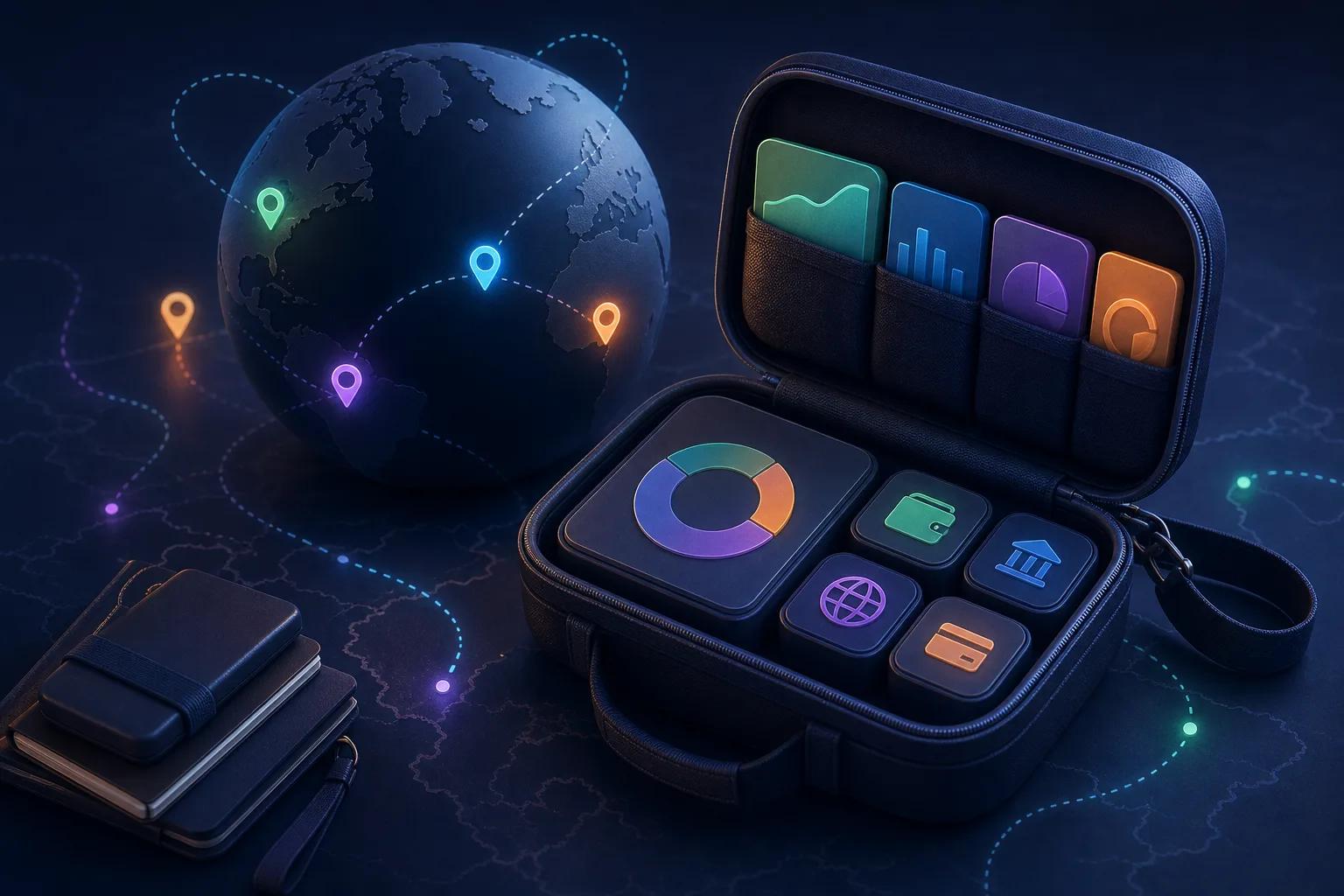
A portable money system is not about having the perfect app, card, bank, or spreadsheet. It is about having a simple way to understand your money when your surroundings keep changing: a new apartment deposit, a new SIM card, a new cash habit, a new transfer route, a new currency, and a new version of “normal.”
Start with a system that does not depend on one country
Many personal finance systems quietly assume a stable life: one salary, one home currency, one rent payment, one bank account, one set of recurring bills, and a familiar grocery store. Long-stay nomads often live inside a much messier pattern. Income may arrive in one currency, rent may be paid in another, daily spending may happen partly in cash, and subscriptions may keep charging in a country you left months ago. If your system only works when life is tidy, it will break as soon as you move.
A portable money system should be built around categories, accounts, currencies, and routines that can survive location changes. Instead of organizing everything around a specific bank or country, organize it around questions you can ask anywhere: How much did I spend this month? Which currency did I spend in? What is due soon? What deposits or reimbursements are still waiting? Which costs are temporary because I just arrived or am about to leave?
The goal is not to remove all friction. Moving countries creates friction. The goal is to make the friction visible before it turns into confusion. A portable system gives every transaction a place to go, even when it is awkward: a cash taxi from the airport, a deposit paid to a landlord, a transfer to a local friend, a coworking day pass, a fee that appears later, or a card charge that settles at a slightly different exchange rate.
- Keep your core categories country-neutral: housing, groceries, eating out, transport, work tools, health, visas and admin, travel days, cash withdrawals, transfers, subscriptions, and buffer.
- Track the role of each account instead of relying only on its brand name: main income account, travel card, local cash wallet, savings buffer, rent account, transfer bridge, or business account.
- Treat each new country as a new routine to observe, not a new identity to rebuild from scratch.
- Make space for temporary costs such as arrival setup, deposits, furniture, SIM cards, coworking trials, laundry changes, and departure logistics.
Separate your money map from your money tools
A common mistake is to confuse the tool with the system. A bank app shows one account. A card app shows card transactions. A transfer service shows transfers. A crypto wallet may show balances or token history. A spreadsheet can show almost anything, but only if you keep feeding it. None of these views, by themselves, is your full money life. They are windows into parts of it.
Your money map is the layer above the tools. It answers what each account is for, how money moves between them, what currency each part lives in, and which numbers you trust for decisions. For example, your map might say that client income lands in a business account, a monthly personal transfer goes to a spending account, rent is paid from a local account or cash, emergency savings stay separate, and subscriptions are reviewed from the card they charge. The map is what stays portable when the specific products change.
This separation matters because nomads often change tools for practical reasons. A card stops working reliably in one region. A local bank account becomes useful during a long stay. A transfer service has better routing for a particular currency. A subscription moves to a different payment method. If your system is tied too tightly to one provider, every tool change becomes a budgeting crisis. If your map is clear, a tool change is just maintenance.
- Write a short account inventory with the purpose, currency, and normal use of each account or wallet.
- Name transfer paths clearly, such as “client income to personal spending,” “home currency to local rent,” or “cash withdrawal for weekly expenses.”
- Use a consistent note for internal transfers so they do not look like income or spending when you review your month.
- Keep a small list of accounts you no longer use but still need to check for refunds, deposits, old subscriptions, or delayed fees.
Design for cash, cards, transfers, and exchange rates
Portable tracking works best when it accepts that money comes in different forms. In some places, cards are easy for almost everything. In others, cash is normal for rent, markets, laundry, taxis, tips, or small restaurants. Sometimes the cheapest or simplest option is a bank transfer. Sometimes a friend pays and you settle up later. A system that treats card data as the only “real” record will miss important parts of nomad life.
Cash needs its own routine because it disappears quietly. You do not need to record every tiny purchase in the moment if that makes your life harder, but you do need a method you can repeat. Some people track each cash transaction. Others record cash withdrawals as spending and then only track large cash payments separately. Others keep a simple cash wallet balance and reconcile it every few days. The right method is the one you can continue when you are tired, jet-lagged, or living in a place where receipts are rare.
Currency conversion also needs a calm approach. Card transactions may authorize at one amount and settle at another. Transfer services may show an exchange rate, a fee, and a final delivered amount. Cash withdrawals may include ATM fees and bank-side fees that appear separately. If you try to make every exchange rate perfectly precise in real time, you may quit tracking. If you ignore currency entirely, your numbers can become misleading. A portable middle ground is to record the original currency, the approximate home or reporting currency value, and any clearly visible fees.
- For cash, choose one primary method: transaction-by-transaction, withdrawal-as-spending, or wallet-balance tracking.
- For rent and deposits, record the payment separately from any expected return, because deposits are not normal monthly spending in the same way rent is.
- For transfers, capture the sent amount, received amount, currency pair, obvious fee, and purpose in plain language.
- For reimbursements, split the story into two parts: what you paid and what you expect to receive back.
- For exchange rates, aim for consistent and useful, not perfect to the last decimal.
Build routines for arrival, normal weeks, and departure
The portable part of your system is not only the categories. It is also the rhythm. Nomad money tends to move through phases. Arrival weeks are full of setup costs and decisions made with limited information. Normal weeks reveal the real price of your routine. Departure weeks bring cleaning fees, final utilities, transport, leftover cash, storage, refunds, and the occasional forgotten subscription. A single monthly budget can hide these phases unless you name them.
An arrival routine helps you avoid judging a new place too quickly. The first week may include airport transport, temporary accommodation, groceries before you know where to shop, a data plan, coworking tests, household basics, and social spending as you meet people. These costs are real, but they are not always the baseline. Marking them as arrival or setup costs helps you see the difference between settling in and living normally.
A departure routine is just as important. Before leaving, check what money is still “in motion.” That might include a housing deposit, a final utility payment, a refund from a canceled booking, a balance on a transit card, local cash, a borrowed item, or a shared expense with a friend. Nomads often lose clarity not because they overspend dramatically, but because small open loops follow them from country to country.
- Arrival checklist: local cash, SIM or data plan, first grocery run, transport from airport or station, housing deposit, coworking setup, household basics, and first transfer route.
- Weekly checklist: record cash, review card charges, label transfers, check upcoming subscriptions, compare spending with your expected local routine, and note anything unusual.
- Departure checklist: deposits, refunds, final bills, remaining cash, canceled memberships, address changes, saved receipts, shared expenses, and subscriptions tied to local services.
- Monthly checklist: review category totals, confirm income received, update account balances, check currency exposure, and decide what needs attention next month.
Keep the record simple enough to maintain
A portable system should be detailed enough to help you make decisions, but not so detailed that it becomes a second job. Many nomads start with an ambitious spreadsheet or a complex app setup, then stop updating it after a busy travel week. The better test is not “Can this system describe my whole financial life?” but “Can I keep using this when my flight is delayed, my landlord wants cash, my card gets declined, and I still need to work?”
One practical approach is to track at three levels. First, keep account balances so you know where money is. Second, track income, spending, transfers, and reimbursements so you know what happened. Third, add context only where it will help future you: arrival cost, deposit, work expense, tax-related record, refund pending, shared cost, or unusual exchange-rate situation. You do not need a long note on every coffee, but you may appreciate a clear note on a rent deposit paid in cash.
This is where local-first, privacy-first tools can fit naturally. For example, Nomad Flow is built around the idea that a personal finance record should be usable across currencies and routines without forcing every detail into a bank-connected workflow. Whether you use an app, spreadsheet, notebook, or a combination, the principle is the same: your record should remain understandable even when your accounts, cards, and countries change.
- Use short, repeatable labels rather than long custom explanations for every transaction.
- Create a small set of tags for messy cases: deposit, refund pending, reimbursable, work expense, arrival, departure, subscription, cash, and transfer.
- Do not over-categorize daily life. If a category does not change a decision, it may not need to exist.
- Keep receipts or screenshots only for items where proof may matter later, such as deposits, business expenses, warranty claims, or large transfers.
- If your tracking falls behind, restart from today and backfill only the transactions that materially affect your understanding.
Make room for taxes, admin, and reference tracking without pretending to know the future
Some parts of nomad money deserve a separate layer because they may matter later, even if you are not making a decision about them today. Taxes, visas, business records, residency questions, insurance, and investing can all depend on personal circumstances and local rules. A finance tracker should help you preserve useful records, but it should not give you false certainty. For anything tax, legal, visa, crypto, or investment related, consider your notes a starting point for a qualified professional or your own careful verification, not final advice.
For freelancers and remote workers, portability often means separating personal life from work life as cleanly as possible. That might include marking client payments, platform fees, business tools, coworking, equipment, professional services, and reimbursed costs. You may not know exactly how an expense will be treated later, and rules vary widely, but clear records are usually easier to work with than a pile of mixed personal card statements. Even a simple tag like “work-related, verify later” can save time.
Crypto reference tracking is another area where calm records are useful. Some nomads hold crypto, get paid occasionally in crypto, or use wallets only as part of a broader financial picture. If crypto is relevant to you, tracking reference values, dates, transfers, and notes can help you understand your own history. But avoid treating a personal tracker as a source of legal, tax, or investment conclusions. Prices move, records can be incomplete, and obligations may depend on details outside the tracker.
- Keep admin notes separate from everyday spending notes so important items do not get buried.
- Tag anything you may need to verify later rather than guessing its final treatment.
- Store dates, amounts, currencies, counterparties, and purpose for larger transfers or business-related transactions.
- For crypto reference tracking, record what happened without assuming what it means for taxes, investing, or reporting.
- Review open admin loops monthly: documents to save, invoices to issue, reimbursements to chase, and questions to ask a professional if needed.
Final thought
A portable money system is not perfect, automatic, or permanent. It is a steady framework you can carry from place to place: clear accounts, simple categories, honest currency records, and routines for arrival, normal life, and departure. When your system can bend without breaking, your money becomes easier to understand wherever you happen to be living next.