


Emergency Fund Planning for People Without One Home Base
A practical way to think about emergency savings when rent, healthcare, flights, cards, and cash can all happen in different currencies.
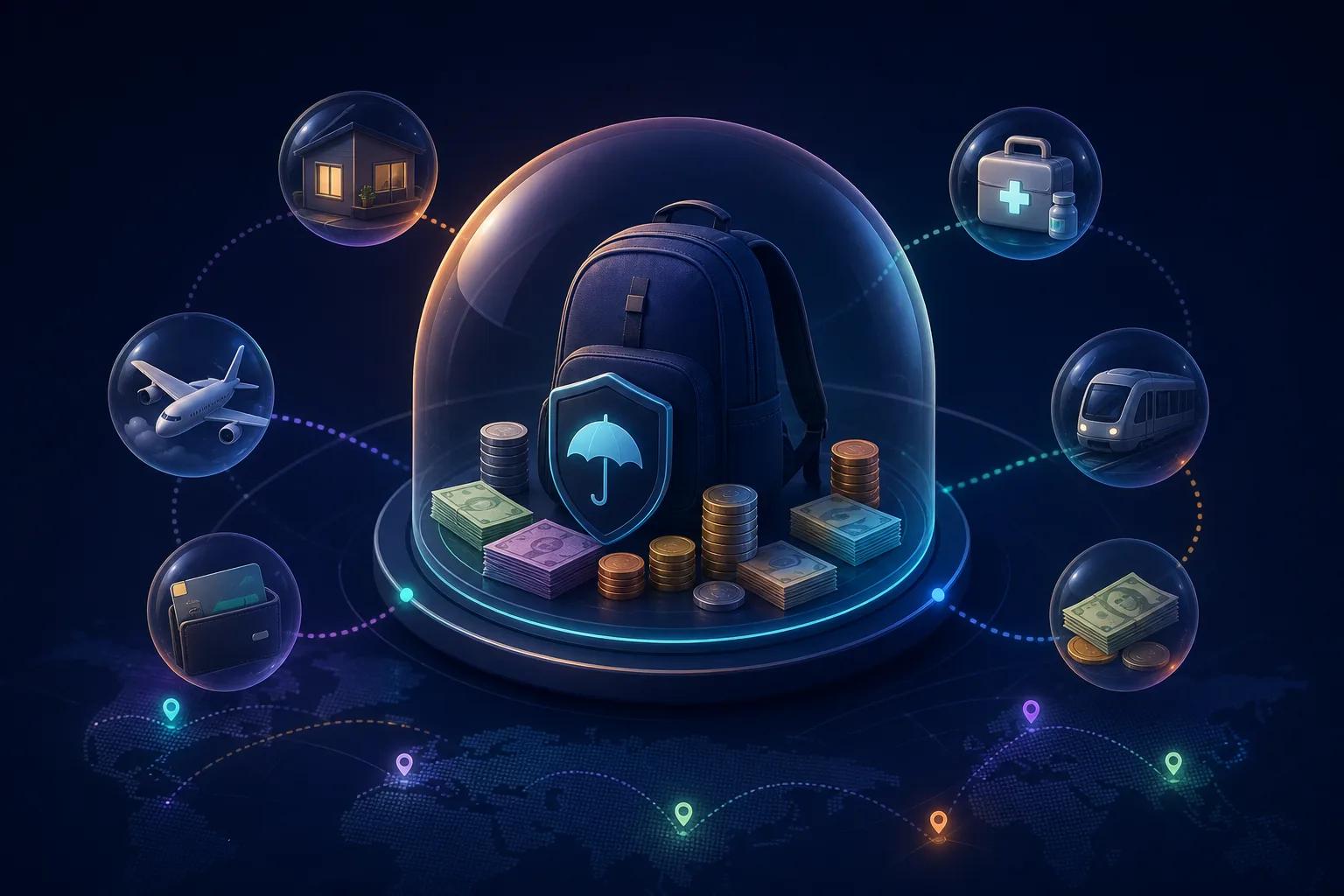
An emergency fund sounds simple when your life is anchored in one city, one bank account, and one currency. For nomads, remote workers, and freelancers living across borders, it is messier. Emergencies can arrive as a medical bill in one currency, a last-minute flight in another, a frozen card, a lost deposit, a delayed client payment, or a laptop repair that must happen before Monday. The goal is not to build a perfect system. It is to build enough slack, in the right places, so one surprise does not force every other part of your life to wobble.
Start with the emergency you are actually trying to survive
Many emergency fund guides begin with a number, usually a multiple of monthly expenses. That can be useful, but for people without one home base, the better starting point is a scenario. What would make you financially unsafe or stuck? What would interrupt your ability to work, leave a country, recover from a health issue, replace essential gear, or cover housing while you sort things out?
A home-based emergency fund often assumes that your rent, healthcare, transport, and support network are all local. Nomad life separates those pieces. You might earn in dollars, pay rent in euros, keep cash in pesos, and need a flight priced in another currency entirely. You may also be far from family, familiar banks, or a healthcare system you understand. That means an emergency fund is not only about total savings. It is also about access, timing, and currency.
A useful first step is to list the situations that would create urgent pressure. Keep the list realistic. You do not need to imagine every possible disaster. Focus on the common disruptions that nomads actually experience: a housing change, a border or visa timing issue, a client delay, a medical appointment, a broken phone or laptop, a lost wallet, a card blocked by fraud detection, a failed transfer, or a sudden need to fly somewhere. Each scenario teaches you something about how much money you need, where it should sit, and how quickly you must reach it.
- If your income is freelance or project-based, include at least one delayed-payment scenario.
- If you rely on one laptop, phone, camera, or tablet to work, treat replacement or repair as an emergency category.
- If your housing is informal or short-term, include the possibility of losing a deposit, paying a new deposit, or overlapping rent.
- If you move often, include the cost of a one-way flight, a few nights of accommodation, and local transport.
- If you use multiple cards or banks, include the risk that one account becomes temporarily unavailable.
Think in layers, not one big pile of money
For nomads, the cleanest emergency fund is usually layered. One large savings balance in a single account can look comforting, but it may not help if the card linked to it is blocked, the transfer takes days, the currency conversion is expensive, or the account is difficult to access from your current country. A layered fund gives you different kinds of money for different kinds of problems.
The first layer is immediate money: enough to handle a bad day. This might include local cash, a working debit card, a backup card, and a small amount in the currency you are currently using. It is not meant to cover months of life. It is meant to get you through a lost wallet, a late arrival, a clinic visit, a taxi, food, a replacement SIM, or a hotel night when your booking falls apart.
The second layer is short-term stability money: enough to buy time. This is the part that covers a bigger disruption, such as a laptop repair, a new rental deposit, a flight, a week or two of accommodation, or a gap between client payments. The third layer is reset money: the amount that lets you pause, relocate, go back to a familiar place, or reduce work for a while without making rushed decisions. These layers may live in different accounts or currencies, but they should all be part of one plan.
- Immediate layer: local cash, a backup card, and enough accessible money for a few urgent days.
- Short-term layer: funds for repairs, deposits, travel changes, medical appointments, and income delays.
- Reset layer: deeper savings for relocation, recovery time, or a longer period of lower income.
- Backup access: more than one card, more than one bank or wallet, and a way to receive transfers if your main option fails.
Build your number from real nomad costs
Instead of asking, “How many months should I save?” ask, “What would it cost to stay safe, housed, connected, and able to work?” This produces a more useful emergency number. For someone living across currencies, the number should include fixed monthly costs, moving costs, work continuity costs, and the extra friction that comes from being away from a home base.
Start with your baseline month: rent or accommodation, food, transport, insurance, phone plan, subscriptions, coworking, storage, debt payments if any, and minimum transfers you must keep making. Then add nomad-specific buffers. These are the costs that do not appear every month but can hit hard when they arrive: deposits, visa-related admin expenses, flights, baggage, urgent accommodation, replacement documents, temporary workspaces, medication, and exchange-rate movement. If a category depends on local rules, contracts, tax residency, immigration status, or insurance terms, treat your estimate as a planning placeholder and verify details with the relevant provider or professional. This article is general information, not tax, legal, investment, or visa advice.
It also helps to separate essential expenses from lifestyle expenses. In a normal month, you might choose cafes, weekend trips, language classes, gyms, and occasional splurges because they are part of a good life abroad. In an emergency month, your number can be leaner. The emergency fund does not have to preserve every routine. It needs to protect your ability to sleep somewhere safe, eat, communicate, move if necessary, and keep earning if you are able.
- One lean month of essentials in your current location.
- One realistic relocation cost, including flight or ground transport, baggage, short accommodation, and setup costs.
- One work-continuity cost, such as laptop repair, phone replacement, data access, or coworking during a housing problem.
- One housing shock, such as a lost deposit, overlapping rent, or a sudden move to temporary accommodation.
- One income-delay buffer if your work is freelance, seasonal, commission-based, or paid through international transfers.
Plan for currency access before you need it
The hardest part of a nomad emergency is often not the total cost. It is the mismatch between where your money is and where the bill appears. A hospital, landlord, airline, repair shop, government office, or local service provider may prefer a certain payment method. Some places are card-friendly. Others are cash-heavy. Some accept international cards, while others do not. A healthy emergency fund should consider both currency and payment rails.
A practical approach is to keep your emergency money spread across a few access points without making it chaotic. You might hold deeper savings in a stable currency you use for long-term planning, keep a smaller balance in your current local currency, and maintain at least one backup card from a separate institution. If you use digital wallets, multi-currency accounts, or transfer services, know their limits before you depend on them. Check whether transfers are instant or delayed, whether cards work where you are, and whether cash withdrawals are reliable. Avoid keeping so much local cash that theft becomes a bigger risk, but avoid keeping so little that one card issue strands you.
Currency conversion also deserves a calm plan. Exchange rates move, and fees vary, but you do not need to optimize every cent during an emergency. You need a process you trust. Decide in advance which currency is your planning currency, which accounts you use for emergency access, and how much local cash feels reasonable for your current location. If you track crypto balances as part of your wider financial picture, it may be useful as reference tracking, but volatile assets are not a dependable substitute for accessible emergency money. Crypto, investing, and tax treatment vary widely, so verify anything important for your situation with qualified guidance.
- Choose one planning currency for your emergency fund so your target number does not change every time you move.
- Keep some money accessible in the currency you are currently spending.
- Carry enough local cash for a short disruption, but not so much that losing it would create another emergency.
- Maintain at least two payment methods that are not dependent on the same card, bank, or device.
- Write down your emergency access plan somewhere secure in case your phone is lost or stolen.
Use your spending history to make the fund less abstract
Emergency planning becomes easier when it is connected to real spending rather than guesses. A nomad budget is rarely smooth: one month includes a deposit and a flight, another is quiet and local, another has annual insurance, software renewals, visa paperwork, or a family visit. If you only look at average monthly spending, you may underestimate the cash you need during lumpy months. If you only look at your worst month, you may set a target so high that you never start.
This is where a local-first tracker like Nomad Flow can be useful, not because it gives you a magic number, but because it helps you see patterns in the mess. When cash withdrawals, card payments, rent, transfers, subscriptions, and currency conversions are recorded in one place, you can identify which costs are truly recurring, which are travel spikes, and which are rare but predictable. You can also label emergency-like spending after it happens: the unexpected flight, the broken charger, the deposit overlap, the medical visit, or the week of temporary accommodation. Over time, your emergency fund target becomes based on your life, not a generic rule.
Review your last six to twelve months if you have the data. Look for your lean baseline, your common moving costs, and your largest surprise expenses. If your life has changed recently, such as a new region, new income pattern, new partner, new pet, or new health need, adjust the numbers instead of treating old data as truth. The point is not precision. The point is to create a fund that reflects the way your money actually moves.
- Tag expenses that kept you safe, housed, connected, or able to work.
- Separate normal lifestyle spending from essential survival spending.
- Look for seasonal costs, annual renewals, and travel spikes that could collide with an emergency.
- Track cash spending, even roughly, because cash-heavy places can hide your true monthly baseline.
- Revisit your target after major moves, income changes, or shifts in health, family, or work responsibilities.
Make the fund easy to maintain while life keeps moving
The best emergency fund is one you can maintain without constant attention. Nomad life already asks you to manage bookings, time zones, work calls, SIM cards, documents, and currency choices. If your savings plan requires perfect discipline, it may fail during busy travel periods. A boring system is better: automatic transfers when possible, simple rules for topping up after use, and a clear boundary between emergency money and everyday spending.
One helpful rule is to refill before upgrading. If you use emergency money for a legitimate reason, the next financial priority is to rebuild the fund before adding new travel plans, gear upgrades, or lifestyle extras. Another is to set a minimum floor for each layer. For example, you might decide that your immediate layer should never fall below a few days of local essentials, and your short-term layer should never fall below the cost of an urgent move. Your exact amounts will depend on your income, responsibilities, health, family support, insurance, and risk tolerance.
It is also worth defining what counts as an emergency before you are tired, stressed, or embarrassed. A true emergency usually protects safety, housing, health, legal ability to remain or leave, or income continuity. A cheap flight deal, a nicer apartment, or a spontaneous trip may be valuable, but it is not the same category. Clear definitions reduce guilt when you need to use the fund and reduce temptation when you do not.
- Set a monthly or per-invoice transfer into emergency savings, even if the amount is small.
- Keep emergency money separate from daily spending so it does not blur into normal life.
- Create a refill rule after any withdrawal.
- Review access before each major move: cards, cash, transfer options, and account logins.
- Treat the fund as practical infrastructure, not as a sign that something will go wrong.
Final thought
An emergency fund without one home base is less about reaching a perfect number and more about building calm access to money when your plans change. Start with realistic scenarios, layer your savings, account for currencies and payment methods, and update the plan as your route, work, and responsibilities change. The result is not a life without surprises. It is a life where surprises have less power to derail everything else.