


The Nomad's Guide to Card, Cash, and Wallet Balances
Balances matter because spending reports only tell half the story: what you spent, what you still have, and which currency can actually pay tomorrow.
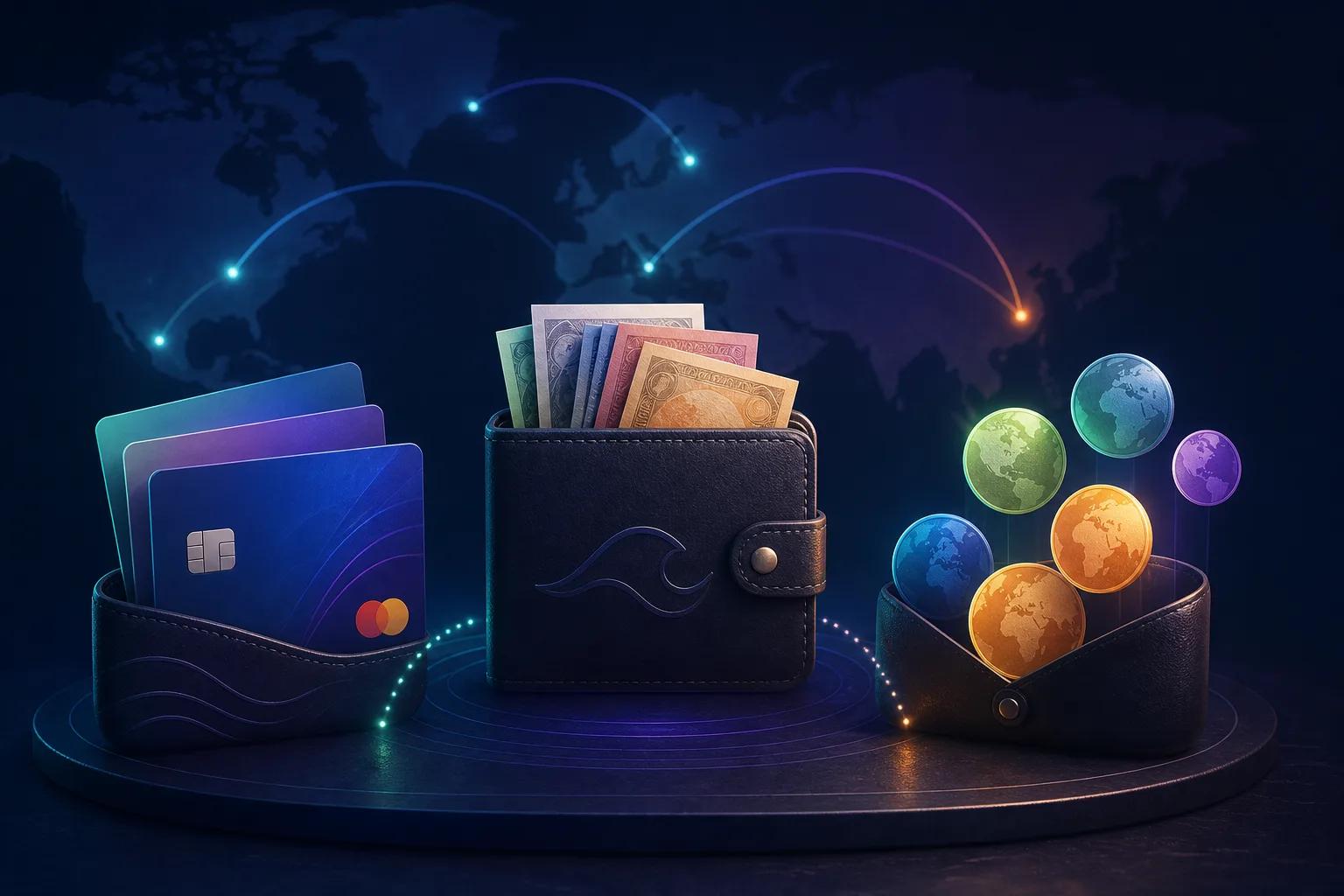
A spending report can say you had a reasonable month while your real life says something different: one card is close to empty, rent is due in another currency, a deposit is locked with a landlord, and the cash in your drawer is doing more work than your app admits. For nomads, balances are not a small detail. They are the bridge between tidy categories and the money you can actually use today.
Why balances tell a different story than spending
Most personal finance tracking starts with expenses: coffee, groceries, coworking, flights, rent, subscriptions, visas, gear, and transfers. That is useful, but it is only one side of the picture. Expenses tell you where money went. Balances tell you where money still is, which currency it is in, how quickly you can reach it, and whether it is available for the next thing that needs paying.
This matters more when your life is split across places. You may have a home-country bank account for income, a travel card for everyday purchases, a local wallet for QR payments, cash for markets and taxis, and a separate account where you keep tax savings or emergency funds. A single monthly total can hide the real question: can the right account pay the right bill at the right time?
Balances also reveal timing problems. A card payment may be pending, a bank transfer may take a few days, an ATM withdrawal may post later than expected, and a refund may appear in one currency while your next rent payment is due in another. If you only review spending after the fact, you may miss the pressure building inside specific accounts.
- Expenses answer: What did I spend?
- Balances answer: What do I have, where is it, and can I use it?
- Cash flow answers: What is arriving, leaving, locked, or delayed?
- Currency position answers: Which money do I have enough of for local life?
Think in accounts first, then categories
A good nomad money system begins by listing the places where money can sit. Not every place is a bank account in the traditional sense. A wallet app, cash envelope, prepaid transit card, platform balance, brokerage cash position, or crypto reference balance may all affect how you make decisions. If it can be used, transferred, converted, reserved, or lost track of, it deserves a place in your balance view.
Categories still matter, but they work best after accounts are clear. For example, lunch paid from a local wallet and lunch paid from an international card may both be Food. Yet from a balance perspective, they are very different. The wallet balance might need topping up with a local transfer. The card balance might be paid from your home bank. The category says the same thing; the account tells you what action may be needed.
This is especially true for rent and deposits. Many nomads treat rent as one expense, but the money often moves through several stages: income arrives, funds are converted, a transfer is sent, rent is paid, and sometimes a deposit is held for months. If you do not separate a refundable deposit from ordinary spending, your reports can look more expensive than your long-term reality. If you do not track it at all, you may forget that part of your money is locked in someone else's hands.
- Create an account for each card, bank account, wallet, and meaningful cash stash.
- Separate refundable deposits from normal expenses when you want a clearer view.
- Track transfers between your own accounts as movement, not spending.
- Use categories to understand habits, but use balances to manage availability.
Card balances: available, pending, and psychologically confusing
Cards are convenient for nomads because they reduce cash handling, help with online bookings, and often work across borders. But card balances can be confusing because the number shown in your banking app may not be the same as what you think you have spent. Some apps show available balance, some show current balance, some include pending transactions, and some update foreign purchases at a rate that changes before the transaction settles.
Credit cards add another layer. A purchase may feel like spending today, but the actual bank balance movement happens later when you pay the statement. If you only track the card payment, your month may look artificially cheap until the bill arrives. If you only track card purchases and forget the repayment as a transfer, your system may double count. The clean approach is to treat the card as its own account: purchases reduce the card balance, repayments move money from a bank account to the card, and interest or fees, if any, are expenses.
Cards also create small distortions through holds and deposits. Hotels, car rentals, scooter rentals, coworking spaces, and some booking platforms can reserve an amount that is not final spending. A hold can reduce your available balance even if it later disappears. For a short trip, that may be annoying. For long-stay nomads managing rent, groceries, and client payment timing, it can affect decisions for days or weeks.
- Record card purchases when they happen if you want realistic spending reports.
- Treat card repayments as transfers between your bank and card accounts.
- Keep an eye on pending transactions, especially in foreign currencies.
- Note temporary holds separately if they affect your available money.
Cash and local wallets: the small balances that run daily life
Cash can look old-fashioned until you need it for a market, bus, small clinic, laundry machine, local SIM, apartment cleaner, island taxi, or neighborhood restaurant that does not take foreign cards. Many nomads under-track cash because it feels informal. The result is a familiar mystery: you withdrew a sensible amount from the ATM, then a week later it is gone and your categories do not explain why.
The simplest cash method is to treat each meaningful cash stash as an account. You do not need to record every coin if that makes the system too heavy. But recording ATM withdrawals as transfers into cash, then logging the larger or repeated cash expenses, gives you a better picture. If cash disappears faster than expected, a quick cash count can reveal the gap without turning your life into bookkeeping.
Local wallets and payment apps deserve similar respect. In many places, wallet balances are not optional extras; they are part of daily infrastructure. You may pay for groceries with one app, food delivery with another, transit through a stored balance, and rent through a local bank transfer. If you top up these wallets from a card or bank account, the top-up itself is usually a transfer. The spending happens later, when the wallet pays the merchant.
- Log ATM withdrawals as transfers from bank to cash, not as instant spending.
- Record cash expenses at a level of detail you can realistically maintain.
- Count cash occasionally and adjust the balance when needed.
- Treat wallet top-ups as transfers, then record the actual wallet payments.
Transfers, conversions, subscriptions, and crypto reference balances
Transfers are where many nomad finance systems become messy. Moving money from one of your accounts to another is not the same as spending, even when fees or exchange differences are involved. If you send money from a home bank to a travel card, that is a transfer. If a service charges a conversion fee, spread, or withdrawal fee, that fee can be recorded as an expense. Separating the movement from the cost helps your reports stay useful.
Currency conversion needs a practical approach rather than perfect precision. You may want to record the amount leaving one currency, the amount arriving in another, and any visible fee. The exact effective rate can be useful, but it does not need to become a research project for every coffee. What matters is that your balances remain believable enough to guide decisions. If you converted too much into local currency and your stay is ending soon, your balance view should show that. If you are low on local funds but have plenty elsewhere, it should show that too.
Subscriptions also affect balances because they often charge the account you are least thinking about. A storage plan, VPN, phone app, cloud tool, creator subscription, or software service may renew on a home card while you are living mainly from a local wallet. One forgotten subscription will not usually break a plan, but several can make a card balance drift away from what you expect. A calm monthly subscription review is often more useful than trying to remember every renewal date from memory.
- Mark transfers between your own accounts as transfers, not income or expenses.
- Record visible transfer, ATM, and conversion fees separately when they matter.
- Check which card or wallet each subscription uses before a long move.
- For crypto or investment-related balances, treat tracking as personal recordkeeping, not advice; tax, legal, and reporting rules vary, so verify your own situation with qualified help if needed.
A simple balance routine for long-stay nomads
The best balance routine is the one you can keep during normal weeks, not only during a quiet Sunday with good Wi-Fi. For many nomads, that means a light daily habit and a slightly deeper weekly check. Daily, you might record obvious transactions and glance at the accounts you use most. Weekly, you reconcile balances, review transfers in progress, check cash, and look for anything that feels off.
A local-first tracker such as Nomad Flow can help because nomad money often includes sensitive details: where you live, which cards you use, how much cash you carry, and which currencies you rely on. The goal is not to make tracking complicated. It is to keep a private, practical balance map that still works when your internet is patchy, your bank app is slow, or your month crosses three countries and four currencies.
A useful routine also includes naming money by purpose. You may have enough total money, but not enough rent money in the correct currency. You may have emergency funds, but they may be in an account that takes time to access. You may have cash, but not enough on the card needed for an online booking. Labels like rent reserve, tax reserve, emergency fund, local cash, next transfer, or deposit held can make balances more human and less abstract.
- Daily: capture obvious spending and check the accounts you used that day.
- Weekly: compare app balances with real balances and correct small differences.
- Monthly: review subscriptions, deposits, transfers, and currency leftovers.
- Before moving: check local cash, refundable deposits, upcoming bills, and account access.
- After arriving: set up local payment routines before your first busy workweek.
Final thought
Spending reports are useful, but balances are what make money feel navigable. When you know which card, cash stash, wallet, and currency can do which job, you make fewer rushed transfers, fewer confused withdrawals, and fewer guesses. For a nomad life, that calm visibility is often worth more than a perfectly categorized past.