


The Problem with Bank-only Personal Finance Apps for Nomads
Bank-sync finance apps often assume one home banking system. Nomads need flexible tracking for cash, cards, currencies, transfers, and local routines.
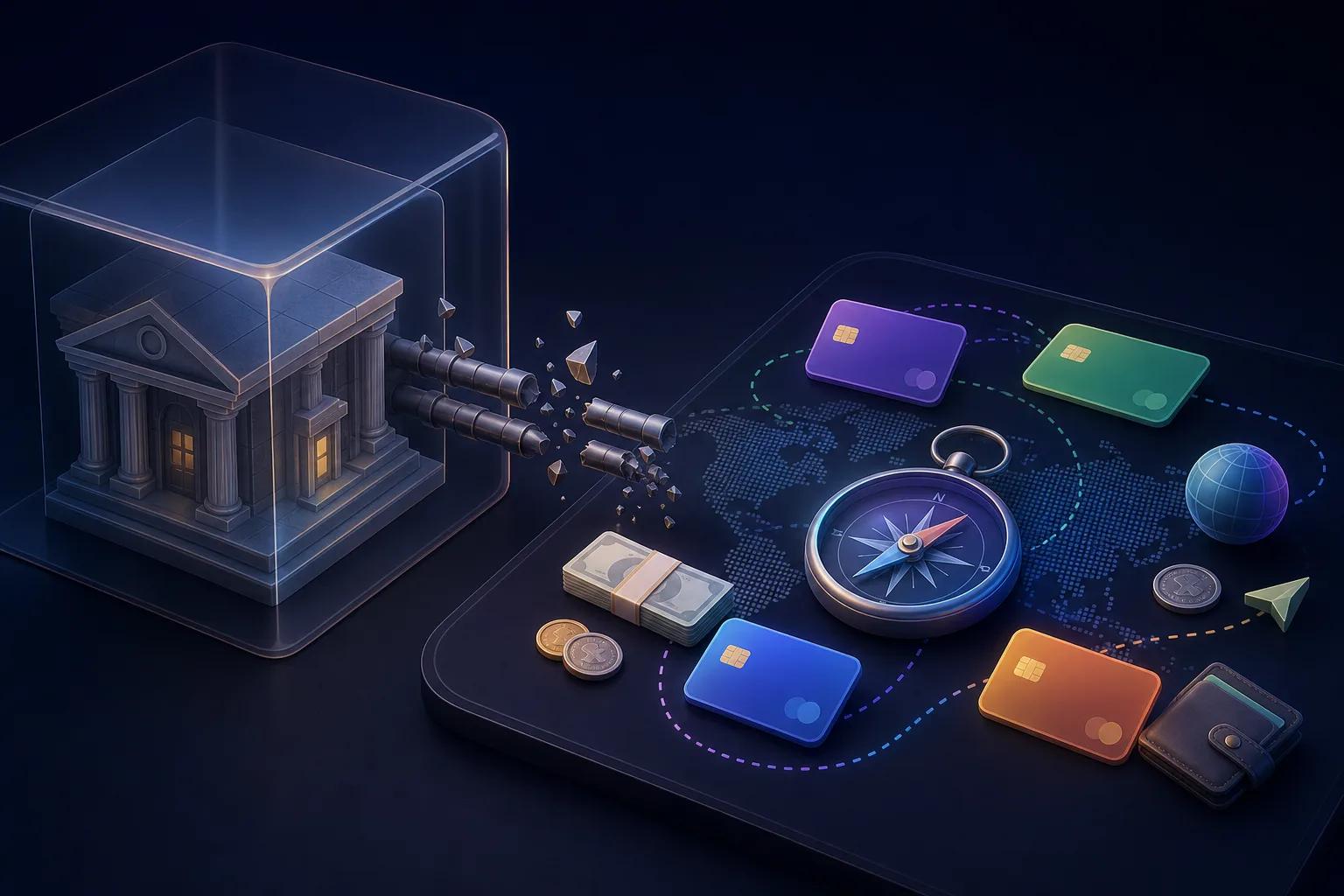
Bank-only personal finance apps can be useful when your money life is mostly contained inside one country, one banking system, and a predictable set of accounts. For many digital nomads, that is not the reality. Money moves through cards, cash, wallets, rent deposits, transfers, subscriptions, currency conversions, and temporary local routines that do not always appear neatly in a bank feed.
Bank feeds show part of the story, not the whole trip
Most bank-sync finance apps are built around a simple assumption: your bank accounts are the source of truth. Connect your checking account, credit card, and maybe a savings account, then let the app categorize what comes in. That can work well when your life is stable and your spending happens through a few domestic accounts. But nomad finances are often split across countries, cards, currencies, and payment habits that change every few months.
A long-stay nomad might pay rent by bank transfer in one place, use cash for food markets in another, cover a coworking deposit through a wallet app, split a scooter rental with a friend, and keep a home-country card active for subscriptions. Some of that appears in a bank feed. Some of it appears late. Some of it appears under confusing merchant names. Some of it never appears at all, especially when cash is involved. The result is a tracker that looks complete because it is connected, but still misses the real texture of daily spending.
This is not because bank-sync apps are bad. They solve a real problem for people whose financial life fits the model. The issue is that nomad money is not just banking data. It is a record of how you live across places: what you paid, in which currency, from which pocket of money, and whether that expense belongs to travel, housing, work, health, subscriptions, or life admin.
- A bank feed can show a card charge, but not always the local context behind it.
- Cash withdrawals show up as one transaction, even if the cash funds ten different purchases.
- Transfers between your own accounts can look like income or spending unless you clean them up.
- Foreign merchant names, payment processors, and delayed settlements can make automatic categories unreliable.
The single-home-country assumption breaks down quickly
Many personal finance apps quietly assume that you have a home currency, a home banking system, and a mostly domestic set of institutions. Nomads often do have a home base on paper, but their money behavior may be spread across several practical layers. You might earn in one currency, save in another, spend in a third, and price your next month of life using a mix of all three. A bank-only app may import the transactions, but it may not help you understand the pattern in a way that matches how you make decisions.
This becomes especially obvious with multi-currency spending. A meal in Thai baht, a rent payment in euros, a client payment in US dollars, and a subscription charged in pounds are not just random transactions. They are connected to your monthly runway, exchange assumptions, and local cost of living. If an app converts everything into one reporting currency without letting you preserve the original amount clearly, you lose information. If it does not handle conversion at all, the monthly picture becomes noisy and hard to compare.
The problem is not only technical. It is practical. Nomads often think in parallel currencies. You may know your apartment costs 18,000 in local currency, your monthly target is 2,200 in your planning currency, and your card statement will settle somewhere else again. A finance system that only shows the bank’s final converted amount can make it harder to remember what the local price actually was.
- Original currency matters because it reflects the price you agreed to pay locally.
- Converted currency matters because it affects your overall budget and runway.
- Settlement currency matters because it is what your card or account eventually records.
- Planning currency matters because it is how you compare months across countries.
Cash, deposits, and informal payments are invisible until you enter them
Cash is still part of nomad life, even for people who prefer cards. In some cities, cash is the easiest way to pay for laundry, street food, local transport, small repairs, tips, or neighborhood services. In other places, card acceptance is common but fees, minimums, or unreliable terminals make cash useful. A bank-only app will usually record the ATM withdrawal, but it will not know what happened after that. Without manual tracking, a single withdrawal becomes a foggy category called cash, and your actual spending disappears inside it.
Deposits create another blind spot. Apartment deposits, coworking access cards, bike rentals, surfboards, utilities, or short-term stays can involve money that is paid now and possibly returned later. A bank feed sees the outgoing transaction. It does not understand whether this was an expense, a refundable deposit, a partial prepayment, or money you should follow up on before leaving town. For nomads, that distinction matters because departure dates are real. If you do not track deposits separately, it is easy to forget them until it is too late or to mistake them for ordinary spending.
Informal payments also matter. You may reimburse a friend for a shared taxi, receive cash from someone for their part of dinner, send a small wallet transfer to a local contact, or pay a landlord through a channel that does not map cleanly to a standard merchant category. These transactions are not exotic; they are normal life across borders. But they tend to sit outside the neat structure that bank-only apps expect.
- Track ATM withdrawals as a source of cash, then break down how that cash is used.
- Separate refundable deposits from true expenses so they do not distort monthly spending.
- Add notes for informal payments, especially when the bank description will not make sense later.
- Record expected returns or follow-up dates for deposits before moving to the next city.
Automation is helpful, but it needs a human layer
Automatic categorization feels convenient, and sometimes it is. A grocery store can be tagged as groceries, a telecom charge can be tagged as phone, and a known subscription can be recognized month after month. But nomad spending often changes meaning depending on context. A hotel could be temporary housing, a visa-run stop, a work retreat, or part of a holiday. A flight could be relocation, client travel, emergency travel, or personal travel. A cafe could be food, workspace, social life, or a business meeting, depending on how you personally track your money.
The goal is not to reject automation. The goal is to avoid letting automation replace understanding. A good system should let you correct, annotate, split, and reframe transactions without fighting the app. If you pay one card transaction for a supermarket run that includes groceries, toiletries, and a replacement charger, the bank feed cannot know that. If your monthly rent includes utilities in one city but not another, categories need enough flexibility to show that difference.
This is where a local-first approach can be calmer for nomads. A local-first tracker such as Nomad Flow does not have to treat bank sync as the only way money becomes real. You can keep records close to you, add cash spending when it happens, preserve original currencies, and build a routine around the way you actually live instead of waiting for every institution to connect perfectly.
- Use automation for repeated, obvious transactions, not as the only source of truth.
- Add short notes when a transaction will not be self-explanatory later.
- Split mixed purchases when the categories matter to your decisions.
- Review recurring charges regularly, especially subscriptions tied to old countries, old SIM cards, or unused tools.
Privacy and portability matter when your life is spread out
Bank-sync apps often require access to sensitive financial accounts through third-party connections. Many people are comfortable with that tradeoff, and in some cases it is convenient. But it is still a tradeoff. If you are moving between countries, changing SIM cards, using different devices, and working from shared or temporary spaces, you may care more about minimizing the number of services connected to your accounts. Privacy is not about hiding something suspicious. It is often about keeping your personal systems simple, quiet, and under your control.
Portability is another concern. Nomads change banks, cards, wallets, countries, and payment methods more often than people with fixed local routines. A bank-only app can become less useful when a connection breaks, a bank is unsupported, a card is closed, or a region is not covered. If your finance history depends entirely on live connections, your records may become fragmented exactly when you need continuity. A tracker that supports manual entries, imports, exports, and clear currency records gives you more resilience.
This is especially relevant for freelancers and remote workers. Income may arrive through platforms, direct transfers, invoices, payment processors, or a mix of accounts. Some months may include reimbursements, client advances, delayed payments, or transfers between personal and business buckets. A bank feed can import the movement of money, but it may not represent the reason behind it. For planning, the reason often matters as much as the amount.
- Keep records in a format you can review even if a bank connection stops working.
- Avoid connecting accounts you do not need to connect just for the sake of completeness.
- Use notes and categories that make sense to you, not only to your bank.
- Export or back up your data periodically if your tools allow it.
A better nomad money system is flexible, not necessarily complicated
The answer is not to build a perfect spreadsheet or record every coin forever. The better goal is a flexible money system that can handle real life without becoming a second job. For most nomads, that means tracking enough detail to understand monthly cost, cash burn, recurring commitments, deposits, currency exposure, and upcoming obligations. It also means accepting that different places require different habits. In one country, card data may cover almost everything. In another, a simple daily cash note may be more accurate than any bank feed.
A practical system should make room for multiple views of the same life. You may want a monthly spending view in your planning currency, a local view for the country you are in, a list of deposits to recover, a subscription list, and a simple way to mark transfers so they do not look like income. If you reference crypto balances, stablecoins, or exchange accounts as part of your personal overview, it can be useful to track them carefully as reference information rather than mixing them casually with everyday spending. Crypto, taxes, visas, residency, and investing can have rules that vary widely, so treat any tracker as an organizational tool and verify important decisions with qualified local guidance when needed.
The most sustainable routine is usually small and regular. Record cash purchases before they blur together. Check card transactions once or twice a week. Reconcile rent, deposits, and transfers when they happen. Review subscriptions at the start or end of each month. Keep categories plain enough that you will still use them when you are tired, offline, changing apartments, or trying to finish client work from a noisy cafe.
- Start with a few durable categories: housing, food, transport, work, health, subscriptions, admin, and personal.
- Keep a separate list for deposits, prepaid rent, and money you expect to get back.
- Mark transfers between your own accounts so they do not inflate spending or income.
- Preserve original currencies for meaningful local expenses, especially rent and larger purchases.
- Review your system after each move and adjust it to the local payment reality.
Final thought
Bank-only apps are built around a tidy version of money that many nomads simply do not have. If your life crosses currencies, cards, cash, transfers, deposits, and changing local routines, your finance tracker needs to be flexible enough to hold the full story, not just the part your bank can see.